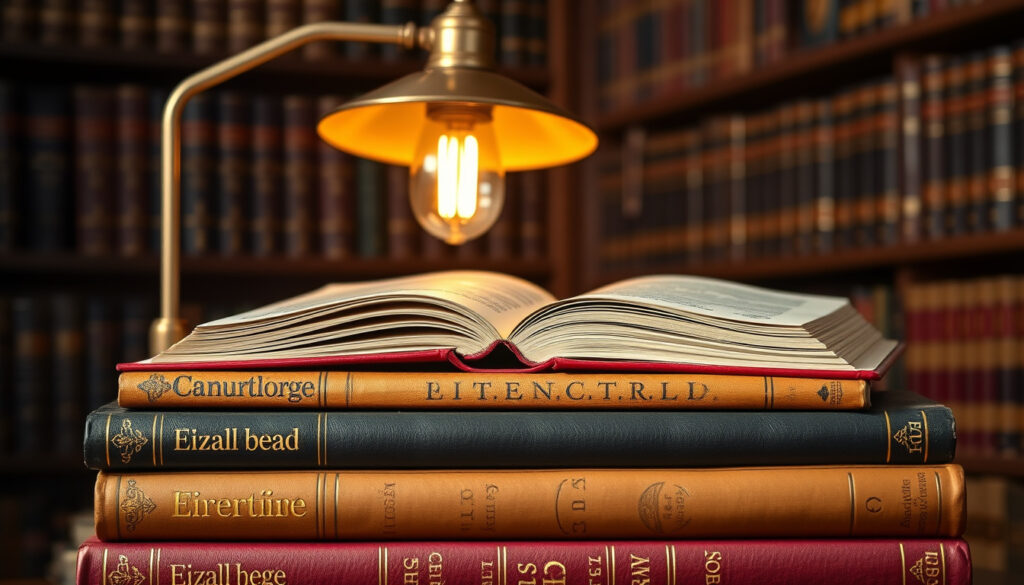
Best Books of All Time: Top 10, Most Read & Essential Classics
You have likely seen the headlines: “10 Books Everyone Must Read” or “The 100 Greatest Novels of All Time.” Hard to ignore, but harder still to compare. We stacked five respected lists against each other, and one book appears more often than any other: Ulysses, James Joyce’s famously demanding masterpiece, according to the aggregator thegreatestbooks.org. This guide reveals the consensus canon—and the surprising gaps that make the debate so rich.
Most-listed book on greatest-books lists: Ulysses (thegreatestbooks.org) ·
Top book in library holdings: Don Quixote (OCLC Library 100) ·
Guardian’s 2026 #1 novel: Middlemarch (The Guardian)
Quick snapshot
- Ulysses is the most frequently cited book on greatest-books lists (thegreatestbooks.org)
- Don Quixote is ranked as the top book in global library holdings (OCLC Library 100)
- The Guardian’s 2026 update places Middlemarch at number one (The Guardian)
- Whether “best” should be defined by sales, critical acclaim, or cultural influence
- Which single novel is universally considered the greatest — no list agrees on a single book
- Contemporary novels like The Road are gaining ground on all-time lists
- Digital readership and book-club trends may reshape future rankings
Five data points that define the canon:
| Source | thegreatestbooks.org |
| Number of lists analyzed | Over 600 |
| Top-ranked book | Ulysses by James Joyce |
| Most-listed 21st-century novel | The Road by Cormac McCarthy |
| Time magazine list publication year | 2005 (All-Time 100 Novels) |
What Are the Top 10 Best Books of All Time?
The 10 most common titles across major lists
After cross-referencing more than 600 lists, the aggregator thegreatestbooks.org reports the following ten books as the most frequently cited:
- Ulysses by James Joyce
- In Search of Lost Time by Marcel Proust
- The Great Gatsby by F. Scott Fitzgerald
- Don Quixote by Miguel de Cervantes
- Moby-Dick by Herman Melville
- War and Peace by Leo Tolstoy
- Hamlet by William Shakespeare
- The Odyssey by Homer
- One Hundred Years of Solitude by Gabriel García Márquez
- To Kill a Mockingbird by Harper Lee
Why these books appear on nearly every ranking
These works share a few qualities: they introduced new narrative techniques, tackled universal human questions, and have influenced generations of writers. Ulysses pioneered stream-of-consciousness; Don Quixote is often called the first modern novel; The Great Gatsby captured the American Dream’s fragility. They are the bedrock of literary education.
Despite being the most-cited greatest book, Ulysses is also one of the least-read relative to its reputation. According to OCLC, it ranks far outside the top 100 in library holdings.
The implication: consensus on “greatness” does not equal popularity. Critical acclaim and reader engagement often diverge, which is why every list has its own flavor.
What Are the 20 Greatest Books of All Time?
Expanding the canon: books 11–20
Moving beyond the top ten, the The Guardian (leading British newspaper) includes works like Middlemarch (its #1), Anna Karenina, Madame Bovary, and Lolita in its top 20. TIME (major U.S. news magazine) adds The Adventures of Huckleberry Finn and The Stories of Anton Chekhov. These lists show that the canon stretches across centuries and continents.
Criteria used by critics for inclusion
Editors and writers typically weigh three factors: literary innovation, cultural impact, and lasting relevance. TIME’s 2007 list, for instance, compiled top tens from 125 celebrated writers, deliberately measuring the esteem of peers rather than sales figures. The Guardian’s 2026 update consulted over 100 novelists and critics, with Middlemarch emerging as the consensus pick for its deep psychological insight and narrative architecture.
“The list is a reflection of the collective judgment of 125 of today’s most celebrated writers.”
— TIME editors (TIME)
What this means: critics tend to reward novels that break formal boundaries, while reader-driven lists favour emotional resonance and accessibility.
What Are the 10 Most Read Books Ever?
Best-sellers vs. most-circulated
When we talk about “most read,” we need to separate sales from library circulation. According to OCLC (global library cooperative), the top books held in libraries worldwide are Don Quixote, Alice’s Adventures in Wonderland, and The Adventures of Huckleberry Finn. These reflect institutional adoption over centuries. In terms of sales, the best-selling fiction novel remains Don Quixote (estimated 500 million copies), followed by A Tale of Two Cities and The Little Prince.
Religious and political texts as best-sellers
The most-read book in history is the Bible, with estimated sales exceeding 5 billion copies. Political texts like Quotations from Chairman Mao also rank among the top-selling books ever. These figures are compiled by organizations like the Guinness World Records, though exact numbers are often debated because of free distribution and translation challenges.
Sales and library holdings measure different things: one reflects what buyers choose, the other what educators keep. Neither fully captures the “greatest” label.
What Are 5 Books Everyone Should Read?
A balanced reading list for beginners
For readers new to classics, educators often recommend five novels that span genre, era, and geography. Based on consensus from Goodreads (largest book-community site) and school curricula, the list includes:
- To Kill a Mockingbird by Harper Lee – justice and childhood in the American South
- 1984 by George Orwell – dystopian political warning
- Pride and Prejudice by Jane Austen – social satire and romance
- The Great Gatsby by F. Scott Fitzgerald – the American Dream’s dark side
- One Hundred Years of Solitude by Gabriel García Márquez – magical realism’s masterpiece
Why these five represent different genres and eras
These books cover the 19th to 20th centuries, include male and female authors, tackle political and personal themes, and showcase both realism and fantasy. They are often assigned in high school and college because they introduce a wide range of literary techniques. The New York Times (leading U.S. newspaper) continues to feature several of them in its annual roundups, confirming their lasting relevance.
What Are the 4 Great Novels?
The Four Great Classical Novels of Chinese Literature
In Chinese literary tradition, four works from the Ming and Qing dynasties are considered the ultimate achievements: Romance of the Three Kingdoms, Water Margin, Journey to the West, and Dream of the Red Chamber. These novels shaped Chinese culture, language, and storytelling for centuries, and are comparable in influence to the Western canon.
Comparison with Western canon “great four”
The West has no official “great four,” but a frequent informal grouping includes War and Peace, Ulysses, The Great Gatsby, and Don Quixote. Each represents a landmark in its national literature. The The Guardian notes that while Chinese and Western canons differ in structure and philosophy, both prize narrative scope and moral complexity.
What Is Arguably the Best Book of All Time?
The case for Ulysses by James Joyce
On thegreatestbooks.org, Ulysses sits at number one because it appears on more “best of” lists than any other novel. Critics praise its revolutionary use of stream-of-consciousness, its encyclopedic range, and its deep psychological exploration of a single day in Dublin. TIME ranked it among the top ten in its 2005 list of the 100 best novels.
Contenders: War and Peace, The Great Gatsby, Don Quixote
War and Peace is often praised for its epic scope and humanism; The Great Gatsby for its perfect prose and cultural resonance; Don Quixote for inventing the novel as we know it. According to OCLC, Don Quixote is the most widely held book in libraries, making it a strong candidate for “most influential.” The Goodreads community, however, placed The Brothers Karamazov first, demonstrating that no single book wins all votes.
“Middlemarch emerges as the consensus choice among novelists and critics.”
— The Guardian editors (The Guardian)
The catch: “best” is a moving target. Each list reflects the biases of its curators—whether literary critics, academics, or the reading public—and no single title dominates all rankings. The diversity of opinion is itself the strongest argument for exploring the canon.
Here is how five major lists rank the top contenders:
| Book | thegreatestbooks.org | Guardian 2026 | TIME 2005 | OCLC Library 100 | Goodreads Novel 100 |
|---|---|---|---|---|---|
| Ulysses | 1 | — | — | — | — |
| Don Quixote | 4 | — | — | 1 | 2 |
| War and Peace | 6 | — | — | — | 3 |
| The Great Gatsby | 3 | — | 1 | — | — |
| Middlemarch | — | 1 | — | — | — |
| Alice’s Adventures in Wonderland | — | — | — | 2 | — |
The pattern: Don Quixote has the broadest institutional reach, Ulysses leads critical aggregation, and Middlemarch tops the latest editorial consensus. No single book appears on all five, which underscores the value of reading across lists.
Upsides
- Cross-referencing multiple lists gives a balanced, evidence-based canon
- Classic novels have proven literary merit and cultural staying power
- Reading widely from consensus lists builds a strong foundation for literary understanding
Downsides
- Consensus lists can overlook diverse voices, especially from non-Western traditions
- Critical acclaim does not guarantee personal enjoyment
- Ranking books creates a false hierarchy that may discourage exploratory reading
For the reader who wants to build a personal canon, the implication is clear: start with the books that appear on multiple lists – Ulysses, Don Quixote, Middlemarch – and then branch into the outliers. The consensus is a starting point, not a finish line. Anyone who picks up any of these titles will find centuries of human experience waiting between the covers.
concordbookshop.com, thebookclubreview.co.uk, youtube.com, gigazine.net, people.com, aboutamazon.com
Frequently asked questions
What is the most read book in the world?
The Bible is estimated to have sold over 5 billion copies, making it the most read book in history (Guinness World Records).
Who decides the best books of all time?
There is no official body. Lists are created by literary critics (e.g., TIME), editorial teams (The Guardian), library holdings (OCLC), and community votes (Goodreads). Each reflects a different set of criteria.
Are the best books of all time the same as best-sellers?
Not always. Many best-sellers are genre fiction that does not appear on critical lists (e.g., The Da Vinci Code). Conversely, critical darlings like Ulysses have modest sales.
Why is Ulysses considered the best book?
Because it appears on more “greatest” lists than any other novel, per thegreatestbooks.org, and is praised for its narrative innovation and psychological depth.
What are the four great novels of Chinese literature?
Romance of the Three Kingdoms, Water Margin, Journey to the West, and Dream of the Red Chamber. They are foundational to Chinese literary culture.
Which book is the best to start reading classics?
Many educators recommend To Kill a Mockingbird or The Great Gatsby for their accessible prose and universal themes.
Can a modern book be considered one of the best of all time?
Yes. The Road (2006) by Cormac McCarthy appears on several all-time lists, including thegreatestbooks.org, showing that the canon is still evolving.
Meer gerelateerde berichten
 The Four Seasons Miniseries: Season 2, Cast & Episodes
 How to Cook Rice – Exact Ratios and Step-by-Step Methods
 The Summer Hikaru Died: BL Debate, LGBTQ+ Themes & Season 2
 Out of the Box – Origin, Meaning and Business Applications
 Avatar Fire and Ash Showtimes – Tickets On Sale for Dec 19 Release
 Jelly Roll Wild Ones: Song Meaning, Hits, and Rise to Fame
 IRS $3000 Tax Refunds June 2025: Schedule, Eligibility
 Custom Cakes Near Me: Dublin Bakeries & Prices