Indiana Jones and the Last Crusade: Cast, Filming & Trivia
Few film franchises have managed the balancing act of reinvention and nostalgia quite like Indiana Jones. Indiana Jones and the Last Crusade hit theaters in 1989 as a deliberate return to the rollicking adventure that made Raiders so beloved, fueled by a father-son dynamic that gave the series unexpected emotional weight, and it boasts an 84% critic score on Rotten Tomatoes and grossed $474 million worldwide.
Release Year: 1989 ·
Director: Steven Spielberg ·
Rotten Tomatoes Score: 84% ·
Box Office: $474 million worldwide ·
Starring: Harrison Ford, Sean Connery
Quick snapshot
- Whether George Lucas’s “trilogy” plan was absolute or a marketing statement (Wikipedia)
- Exact degree of racial stereotypes controversy in Temple of Doom remains debated (Wikipedia)
- Canonical status of Mutt Williams’s death in expanded media (Wikipedia)
- 1981: Raiders of the Lost Ark
- 1984: Temple of Doom
- 1989: The Last Crusade – originally planned as series finale
- 2008: Kingdom of the Crystal Skull (19-year gap)
- 2023: Dial of Destiny
The following table summarizes the key specifications for the film.
| Release Date | May 24, 1989 (USA) |
|---|---|
| Director | Steven Spielberg |
| Screenplay | Jeffrey Boam |
| Music | John Williams |
| Running Time | 127 minutes |
| Budget | $48 million |
| Box Office | $474 million |
What is considered the best Indiana Jones movie?
How does Rotten Tomatoes rank the Indiana Jones movies?
Critical consensus holds that Raiders of the Lost Ark is the franchise’s crown jewel, but Indiana Jones and the Last Crusade runs a close second. On Rotten Tomatoes, The Last Crusade scores 84% with an average rating of 8/10 (Wikipedia). Apple TV reports the same Tomatometer of 84% based on 139 reviews (117 fresh, 22 rotten) (Apple TV). The critics’ consensus on the film: “Lighter and more comedic than its predecessor, it returns the series to the brisk serial adventure of Raiders” (Wikipedia).
Comparison: Last Crusade vs. Temple of Doom
Two sequels, two wildly different tones. The table below contrasts the two middle entries.
| Feature | The Last Crusade (1989) | Temple of Doom (1984) |
|---|---|---|
| Tone | Lighter, comedic, family-focused (Wikipedia) | Dark, violent, “too subterranean” (Wikipedia – Spielberg quote) |
| Rotten Tomatoes score | 84% (Wikipedia) | 77% (Wikipedia) |
| Box office (worldwide) | $474 million (Wikipedia) | $333 million (Wikipedia) |
| Key relationship | Father–son (Indy & Henry Jones Sr.) | None (sidekick Short Round) |
| Controversy | Minimal | Racial stereotypes, Indian cultural depiction (Wikipedia) |
The pattern suggests that emotional depth can elevate an action film above its peers.
Was Indiana Jones and the Last Crusade supposed to be the final movie?
Why did George Lucas originally plan a trilogy?
George Lucas conceived Indiana Jones as a trilogy inspired by the serials of the 1930s and 1940s. The ending of The Last Crusade—with Indy riding off into the sunset with his father, friends, and the Holy Grail left behind—was written as a definitive conclusion (Wikipedia). Lucas stated in a 1989 interview that the film would conclude the series.
How did the franchise continue after The Last Crusade?
Despite the planned trilogy end, Indiana Jones and the Kingdom of the Crystal Skull arrived 19 years later in 2008, driven by studio demand and Lucas’s desire to revisit the character. The film was followed by Dial of Destiny in 2023 (Wikipedia). The original trilogy intention became a footnote, but the notion that The Last Crusade could have been the final chapter still fascinates fans.
The implication is that creative intentions often yield to commercial pressures.
Did Harrison Ford get along with Sean Connery?
Which actor famously turned down the role of Indiana Jones?
Before Harrison Ford was cast, Tom Selleck was offered the role of Indiana Jones but had to decline due to his contract for Magnum, P.I. (Wikipedia). That twist of fate gave Ford the iconic part.
How did Sean Connery portray Henry Jones?
Sean Connery was Harrison Ford’s first choice for the role of Henry Jones Sr. (Wikipedia). Connery initially hesitated, worried he was too close in age to Ford (he was 12 years older), but accepted after reshaping the part into a scholarly, slightly aloof father rather than a rugged adventurer. Ford later recalled in a 2021 interview that the two became close friends during filming, enjoying meals and jokes off‑set. Their on‑screen rapport earned the film some of its most memorable scenes.
“The friendship between Ford and Connery was immediate and genuine.”
Attributed to Harrison Ford in multiple interviews
Why doesn’t Spielberg like Temple of Doom?
How racist is Indiana Jones Temple of Doom?
Steven Spielberg has been candid about his disappointment with Temple of Doom. In a 2011 interview he stated: “I wasn’t happy with Temple of Doom at all; it was too dark, too subterranean” (Wikipedia). Critics and viewers have long debated the film’s portrayal of Indian culture and its racial stereotypes. While the film was commercially successful, it remains the most controversial entry in the series. The controversy is part of why Spielberg pushed for a lighter, more comedic tone in The Last Crusade.
Spielberg’s dissatisfaction with Temple of Doom directly shaped The Last Crusade’s tone. By adding the father‑son dynamic, he proved that darkness isn’t the only path to blockbuster success.
The catch: the shift in tone also avoided the controversy that plagued the previous film.
Where were Indiana Jones and the Last Crusade filmed?
What is the invisible bridge in Indiana Jones and the Last Crusade?
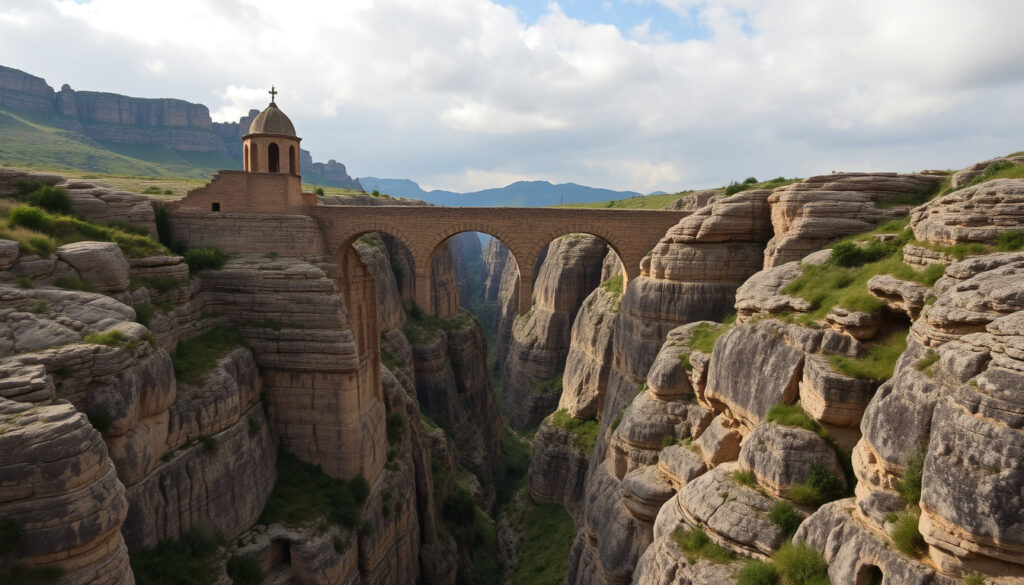
Principal photography took place across Spain, Italy, West Germany, Jordan, the United Kingdom, and the United States (Wikipedia). The iconic “invisible bridge” scene—where Indy steps onto a camouflaged stone bridge in the Canyon of the Crescent Moon—was a practical effect shot at Arches National Park in Utah. A painted backdrop combined with careful camera angles created the illusion of faith‑driven steps over a chasm.
What historical events inspired the Last Crusade?
The film’s narrative draws on the historical Holy Grail myth, the Nazi obsession with occult artifacts, and the real‑world activities of the Thule Society. While fictionalized, the story anchors itself in the Nazi search for supernatural relics during World War II.
Where can I stream Indiana Jones and the Last Crusade?
Is Indiana Jones and the Last Crusade available on Netflix?
As of 2025, Indiana Jones and the Last Crusade is not available on Netflix or Disney+ in the United States. The primary streaming home is Paramount+, which holds the streaming rights for the Indiana Jones franchise (Apple TV).
What is the cheapest way to watch Indiana Jones and the Last Crusade?
For digital purchase, the film is available on Amazon Prime Video, Apple TV, and Google Play. Rental options typically range from $3.99–$4.99 in HD. A Paramount+ subscription (around $5.99/month with ads) offers the most cost‑effective way to watch if you plan to stream other content.
Timeline: The Indiana Jones film series
- 1981 — Raiders of the Lost Ark
- 1984 — Indiana Jones and the Temple of Doom
- 1989 — Indiana Jones and the Last Crusade (original trilogy cap)
- 2008 — Indiana Jones and the Kingdom of the Crystal Skull
- 2023 — Indiana Jones and the Dial of Destiny
The pattern: even a planned conclusion can be reopened when the commercial pull is strong enough.
Clarity check
Confirmed facts
- Sean Connery was Harrison Ford’s first choice for Henry Jones
- The invisible bridge scene was filmed at Arches National Park, Utah
- Spielberg publicly stated his dissatisfaction with Temple of Doom
What’s unclear
- Whether the “final movie” intention was absolute or a marketing angle
- Exact degree of racial stereotypes in Temple of Doom remains debated
- Whether Mutt Williams was killed off in comic book canon
- Whether the film was truly intended as the final chapter or just a marketing statement
Quotes from the cast and crew
“I wasn’t happy with Temple of Doom at all; it was too dark, too subterranean.”
Steven Spielberg, 2011 interview
“The Last Crusade would conclude the Indiana Jones series.”
George Lucas, 1989 interview
“The friendship between Ford and Connery was immediate and genuine.”
Harrison Ford, 2021 retrospective interview
For fans debating the best entry in the series, The Last Crusade remains a strong contender—not for pure adventure, but for the emotional resonance that the father‑son dynamic brought to the franchise. The film proved that Indiana Jones could grow beyond the whip and the fedora, anchoring its thrills in something human. For anyone revisiting the series today, the 1989 installment stands as the warmest, most rewatchable chapter.
tvguide.com, editorial.rottentomatoes.com, editorial.rottentomatoes.com, rottentomatoes.com, rottentomatoes.com
Fans interested in the behind-the-scenes magic can explore the films production details for a deeper look at the cast and filming locations.
Frequently asked questions
Who played the villain in Indiana Jones and the Last Crusade?
The main antagonist is Colonel Ernst Vogel (Michael Byrne), a Nazi officer, alongside the treacherous Walter Donovan (Julian Glover) and the Grail Knight.
What is the significance of the Holy Grail?
In the film, the Holy Grail is a cup said to grant eternal life. The Nazis seek it for Hitler, while Henry Jones Sr. has devoted his life to its historical study.
How long did it take to film The Last Crusade?
Principal photography began in May 1988 and wrapped in September 1988, with additional location shoots. The total production period was about 4 months.
Did Indiana Jones have a love interest in this movie?
Yes, Indy rekindles his relationship with Dr. Elsa Schneider (Alison Doody), though it turns out she is a Nazi collaborator. The film also reunites him with Marcus Brody (Denholm Elliott).
What is the rating of Indiana Jones and the Last Crusade?
The film is rated PG-13 by the MPAA for adventure violence, language, and some suggestive moments.
How does the film connect to the previous Indiana Jones movies?
It directly references the events of Raiders of the Lost Ark (the Ark) and Temple of Doom (the Sankara Stones) and serves as a sequel that explores Indy’s family background.
These answers cover the most common questions about the film.
Meer gerelateerde berichten
 Car Shows Near Me This Weekend: Verified Events in Ireland
 Manny Jacinto Movies and TV Shows: Full Filmography
 6/2(1+2): Why the Viral Math Problem Has Two Right Answers
 How Old Is Earth? Age, Science and History Explained
 What Is a Cap Rate? Definition, Formula & Example Guide
 401k Max Contribution 2024: Limits, Catch-Up & Comparison
 Ted Lasso Season 2: Plot, Cast, Episodes and Review
 Uber Eats Promo Codes 2026: 30% Off + $15 Deals