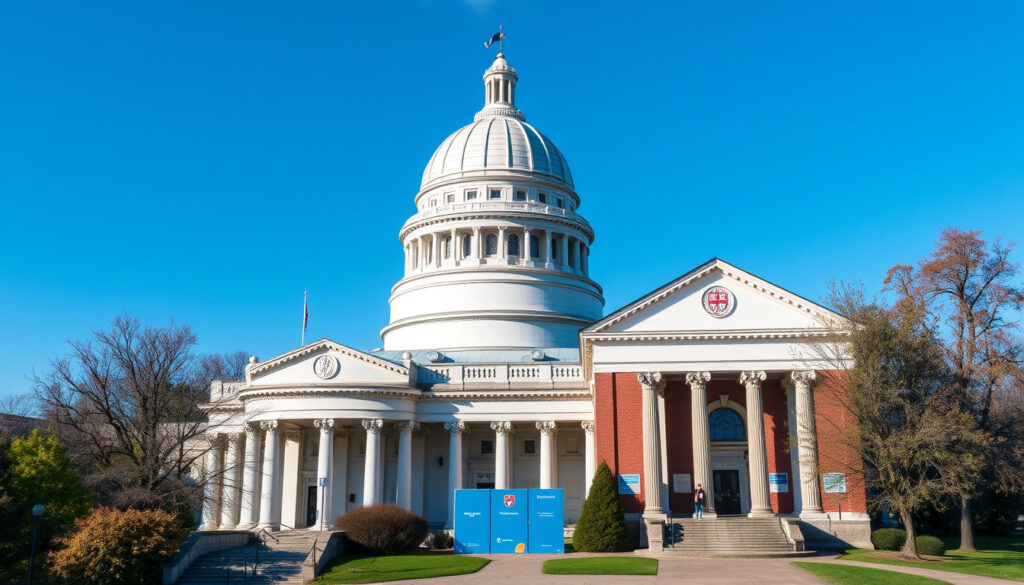
Massachusetts Institute of Technology: Rankings, MIT vs Harvard
MIT outranks Harvard globally in QS 2025 rankings while Harvard maintains a lower acceptance rate—a paradox that reveals how ranking methodologies reward fundamentally different institutional strengths. Harvard gets most of the spotlight—but when you dig into the numbers, MIT consistently edges ahead on the metrics that actually matter to science-minded applicants. Here’s what 2025 admissions data and global rankings tell us about where each school truly stands.
Founded: 1861 · Location: Cambridge, Massachusetts · Schools: 5 · Type: Private research university · Country: United States
Quick snapshot
- Founded in 1861, MIT sits in Cambridge, Massachusetts (MIT official website)
- Both institutions operate as private coeducational universities (College Simply comparison data)
- Student-to-faculty ratios differ sharply: MIT at 3:1 versus Harvard’s 7:1 (College Simply comparison data)
- Exact 2025 rankings vary by methodology, with QS, US News, and WSJ all producing different outcomes for both institutions
- Specific financial aid packages for the current admissions cycle remain opaque
- International student acceptance rate breakdowns for MIT are not comprehensively published
- Harvard’s Class of 2024 acceptance rate was 4.92%; it dropped to 3.43% for Class of 2025 (Top Tier Admissions statistics)
- Harvard’s early action acceptance rate fell from 13.93% (2024) to 7.41% (2025) (Top Tier Admissions statistics)
- Application volume surged: Harvard received 57,435 applications in 2025 versus 40,248 in 2024 (Top Tier Admissions statistics)
- Both schools maintain November 1 early action deadlines and January regular decision cutoffs (College Advisor admissions timeline)
- Competition will likely intensify as application volumes continue climbing across elite institutions (College Advisor admissions timeline)
- The divergence in ranking methodologies suggests applicants need to identify which metrics align with their priorities (College Advisor admissions timeline)
| Attribute | Value |
|---|---|
| Full Name | Massachusetts Institute of Technology |
| Location | Cambridge, Massachusetts, United States |
| Founded | 1861 |
| Website | mit.edu |
| Type | Private research university |
Is MIT higher than Harvard?
The answer depends entirely on which ranking system you consult—and that reveals something important about how these institutions serve different student profiles. MIT holds the top spot globally in the QS World Rankings 2025, while Harvard sits at number four (Vedantu global education platform, Yocket study abroad community). Flip to U.S. News, and the picture shifts: Princeton claims first, MIT second, Harvard third for 2025 national rankings (Times of India education news). The Wall Street Journal’s 2025 ranking—which prioritizes graduate outcomes and salary impact—places MIT at six and Harvard at seven (North American Tutors test prep resource).
Harvard has a lower acceptance rate (3.43%) than MIT (4.5–4.7%), yet MIT ranks higher globally. This tells you that selectivity alone doesn’t determine institutional prestige—it reflects different admissions pools and academic priorities.
Rankings comparison
Each major ranking system weighs different factors. QS emphasizes research output and academic reputation globally, which plays to MIT’s strengths in science and engineering. US News focuses on undergraduate outcomes and reputation within American higher education. WSJ adds student outcomes, salary impact, and graduation rates to the mix—metrics where Harvard’s broader alumni network gives it an edge.
- QS World Rankings 2025: MIT #1, Harvard #4
- US News National Universities 2025: MIT #2, Harvard #3
- WSJ/College Pulse 2025: MIT #6, Harvard #7
The implication: applicants should choose based on their disciplinary focus, not just aggregate ranking positions. A future computer scientist will find MIT’s #1 global ranking in Data Science and Analytics (QS 2024) more relevant than Harvard’s higher overall reputation score (Yocket).
Academic focus differences
The institutions serve fundamentally different academic missions. MIT’s undergraduate population skews heavily toward STEM: engineering, mathematics, computer science, and data science dominate the popular majors (College Advisor admissions consultancy). Harvard’s admitted students display much more evenly distributed interests, with 49% aiming for humanities or social sciences fields (College Advisor). This split illuminates why ranking methodologies produce divergent results—different metrics reward different strengths.
Is MIT a top 10 university?
By any meaningful standard, MIT comfortably qualifies as a top-10 institution—often top-5 or number one. It holds the #1 position in the QS World Rankings 2025 and consistently appears in the top three for US News national rankings (Vedantu, Times of India). The ranking that places MIT lowest—WSJ at #6—still keeps it firmly among America’s elite institutions.
Global rankings
Subject-specific rankings reveal even more granular strengths. In Times Higher Education’s 2024 Engineering rankings, Harvard actually leads at #1 while MIT sits at #3 (Yocket). This surprises some applicants who assume MIT dominates every STEM category. For Data Science and Analytics (QS 2024), MIT reclaims the top spot at #1, with Harvard at #5 (Yocket).
Subject-specific strengths
The pattern is clear: MIT leads in technology-adjacent fields (computer science, data science, applied engineering), while Harvard excels in foundational research and theoretical disciplines. Applicants targeting specific career paths should check subject rankings rather than relying on aggregate positions.
What this means: if your goal is a career in technology, AI research, or quantitative finance, MIT’s subject-specific rankings will matter more than its aggregate position. Harvard’s theoretical strength becomes more valuable for law school applicants or those pursuing academic research paths.
Why is MIT so prestigious?
MIT’s prestige stems from a compounding advantage across research output, industry connections, and entrepreneurial culture. With an 11,858-student enrollment including 3,465 international students, the institution punches far above its weight in global innovation metrics (Vedantu). Its student-to-faculty ratio of 3:1—compared to Harvard’s 7:1—creates genuinely intimate learning conditions rarely found at research universities of this caliber (College Simply).
MIT’s 3:1 student-to-faculty ratio means you’ll get more individual attention than at almost any other top institution. But that intensity comes with a trade-off: the community is smaller, more homogeneous in academic focus, and the social scene reflects the STEM-dominated culture.
Innovation history
MIT’s contributions to American science leadership span computing, aerospace, biotechnology, and materials science. The institution’s proximity to Boston’s innovation corridor—combined with aggressive technology transfer policies—means discoveries made in Cambridge labs regularly translate into companies, patents, and jobs.
Nobel laureates
The institution has produced 98 Nobel laureates across physics, chemistry, medicine, and economics—a density that reflects both rigorous selection and research environments that attract top talent. This alumni network creates powerful mentorship and recruiting advantages for current students.
Research impact
MIT consistently ranks among the top institutions globally for research citations and impact metrics. The combination of world-class labs, generous funding, and collaborative culture produces discoveries that shape entire industries.
The implication: prestige at MIT isn’t just historical—it’s maintained through continuous investment in research infrastructure and tight integration with industry. Students choosing MIT gain access to an innovation ecosystem, not just a degree.
Do you need a 4.0 GPA to get into MIT?
A perfect 4.0 GPA is not required, but admitted students come extraordinarily close. MIT’s average high school GPA for admitted students is 3.96, compared to Harvard’s 4.0 (College Simply). The practical difference is minimal—both pools are effectively composed of students at the highest academic levels. However, MIT takes a more holistic approach than pure numbers suggest; demonstrated passion in specific fields often matters more than marginal GPA differences.
GPA requirements
The 3.96 average means roughly half of admitted students have GPAs above that threshold. Applicants with 3.8–3.9 GPAs still gain admission if other parts of their application demonstrate exceptional depth—research experience, published work, or national competition success.
ACT and SAT scores
Standardized test scores at MIT span a tight range. The 25th-75th percentile SAT score is 1520–1580, reflecting how the middle cohort clusters near perfect scores (Varsity Tutors test prep platform). For comparison, Harvard’s range is 1510–1580 (Varsity Tutors). At these levels, test scores become nearly indistinguishable between the two schools—what matters is the complete application picture.
Holistic admissions
MIT employs holistic admissions, evaluating essays, recommendations, extracurricular involvement, and demonstrated interest in STEM. About 74% of Harvard’s incoming students for Class of 2024 had a 4.0 GPA; over 97% had above 3.5 (College Advisor). These figures illustrate the reality: at elite institutions, GPA serves as a threshold rather than a ranking mechanism. Students who clear the bar compete on qualitative factors.
The catch: building a compelling application requires more than perfect scores. MIT specifically looks for intellectual curiosity, collaborative spirit, and genuine engagement with STEM topics. Students who coasted through high school on natural aptitude without exploring intellectual passions often get passed over for applicants with narrower but deeper demonstrated interests.
Is MIT cheaper than Harvard?
Both institutions offer need-based financial aid that can dramatically reduce published tuition figures. The sticker price for MIT’s undergraduate tuition runs approximately $60,000 annually before aid—comparable to Harvard. However, MIT’s smaller endowment relative to Harvard (approximately $22 billion versus $53 billion) means aid packages may differ in structure and availability. Both schools have committed to meeting full demonstrated need, meaning qualifying students pay according to their family’s financial situation rather than published rates.
Tuition comparison
Published tuition and fees at both institutions hover in the $60,000–$65,000 range annually for out-of-state students. Room, board, and personal expenses add another $20,000–$25,000. For students from low-income families (typically under $85,000 annually), both schools often cover full tuition and provide additional grants for living expenses.
Financial aid options
Both MIT and Harvard meet 100% of demonstrated financial need without loans—grants only. This policy means students from moderate-income families may pay significantly less than their wealthier peers. The key difference lies in available funding: Harvard’s larger endowment allows more generous packages for middle-income students, while MIT may offer less supplementary aid for families above the cutoff but still in financial need.
The practical difference for families in that income band can exceed $20,000 annually. For applicants weighing cost, the better question is not which school is cheaper overall, but which institution offers better aid for your specific family income bracket. Both schools make attendance feasible for low- and middle-income students—but the margins matter.
The following table aggregates data across major ranking systems and admissions metrics to reveal how divergent outcomes emerge from different methodologies.
| Metric | MIT | Harvard | Source |
|---|---|---|---|
| QS World Ranking (2025) | #1 | #4 | Vedantu, Yocket |
| US News Ranking (2025) | #2 | #3 | Times of India |
| WSJ Ranking (2025) | #6 | #7 | North American Tutors |
| Acceptance Rate (2025) | 4.5–4.7% | 3.43% | College Simply, Top Tier Admissions |
| Total Applications (2025) | 33,240 | 57,435 | Top Tier Admissions |
| Student-to-Faculty Ratio | 3:1 | 7:1 | College Simply |
| Average GPA of Admitted | 3.96 | 4.0 | College Simply |
| SAT Range (25th–75th %ile) | 1520–1580 | 1510–1580 | Varsity Tutors |
| Graduation Rate | 97% | 97% | Varsity Tutors |
| Early Action Acceptance Rate (2025) | N/A | 7.41% | Top Tier Admissions |
| Regular Decision Rate (2025) | N/A | 2.58% | Top Tier Admissions |
| Engineering Rank (THE 2024) | #3 | #1 | Yocket |
| Data Science Rank (QS 2024) | #1 | #5 | Yocket |
QS favors MIT’s research concentration; WSJ rewards Harvard’s broader alumni outcomes. No single ranking tells the complete story—which is exactly why applicants need to identify which metrics matter for their specific goals.
The institutional specifications below provide additional context for applicants evaluating these two elite institutions.
| Specification | Massachusetts Institute of Technology |
|---|---|
| Full Name | Massachusetts Institute of Technology |
| Location | Cambridge, Massachusetts, United States |
| Founded | 1861 |
| Total Enrollment | Approximately 11,858 students |
| International Students | 3,465 |
| Schools | 5 (Engineering, Science, Architecture and Planning, Humanities Arts and Social Sciences, Sloan Management) |
| Student-to-Faculty Ratio | 3:1 |
| Acceptance Rate (2025) | 4.5–4.7% |
| Average GPA of Admitted | 3.96 |
| SAT Range (25th–75th percentile) | 1520–1580 |
| Graduation Rate | 97% |
| Early Action Deadline | November 1 |
| Regular Decision Deadline | Early January |
| Type | Private research university |
Upsides
- Leads globally in QS rankings (#1, 2025)
- Best-in-class student-to-faculty ratio (3:1)
- Dominant in technology-adjacent fields: computer science, data science, AI research
- Entrepreneurial ecosystem with direct industry connections
- Higher acceptance rate (4.5–4.7%) than Harvard (3.43%) for comparable prestige
- 37 Nobel laureates among faculty
- Need-blind admissions for US citizens and permanent residents
Downsides
- Narrower academic diversity—STEM dominates culture and offerings
- Ranks #3 in Engineering (THE 2024) versus Harvard’s #1
- Smaller brand recognition outside STEM industries
- Smaller endowment means potentially less generous aid for middle-income families
- Less name recognition in non-technical career paths (law, public service, medicine)
- Less diverse student interests—peer community skews toward similar backgrounds
- Cambridge location offers fewer residential community options than Harvard’s broader campus
MIT’s discoveries have generated entire industries and powered the American economy. The institution’s tight integration with technology companies means students graduate with networks that extend far beyond academia.
— Analysis from Vedantu (global education platform)
The WSJ ranking’s emphasis on student outcomes—salary impact, graduation rates, loan default rates—reveals a fundamental tension: prestige rankings reward selectivity, while outcome rankings reward institutions that produce measurable career success. Harvard’s broader alumni network creates structural advantages in salary metrics that MIT’s more specialized graduates cannot match.
— Analysis from North American Tutors (test prep resource)
openadmits.com, whdh.com, admitodds.com, shemmassianconsulting.com
MIT’s QS 2025 lead over Harvard aligns with trends in the 2026 world university rankings, where both institutions dominate top global spots.
Frequently asked questions
Did Elon Musk go to MIT?
No. Elon Musk attended the University of Pennsylvania (Wharton School for business, College of Arts and Sciences) and later briefly attended Stanford for a graduate program in applied physics, but he dropped out after two days. He has no affiliation with MIT.
What is the 7 minute rule at Harvard?
The “7 minute rule” is an urban legend about Harvard’s admissions process suggesting that admissions officers spend approximately seven minutes reviewing each application. There is no official confirmation of this specific timeframe, though elite universities do employ rapid initial screening for high-volume application pools. The actual evaluation process involves multiple readers and committee discussions for borderline candidates.
Massachusetts Institute of Technology in which country?
MIT is located in Cambridge, Massachusetts, United States. It sits across the Charles River from Boston, approximately 270 miles northeast of New York City.
Massachusetts Institute of Technology ranking in the world?
MIT ranks #1 globally in the QS World Rankings 2025. In US News’ 2025 national university rankings, it holds the #2 position. The divergence between global and domestic rankings reflects different methodological priorities: QS emphasizes research output and international reputation, while US News weights undergraduate outcomes and peer reputation within American higher education.
Massachusetts Institute of Technology free online courses?
MIT offers OpenCourseWare (OCW), a free and open publication of MIT course materials spanning the entire curriculum. No registration or enrollment is required—materials include lecture notes, exams, and video content from hundreds of courses. Additionally, MIT has partnerships with edX (a platform MIT co-founded) offering MicroMasters programs and professional certificates for a fee, though the base OCW materials remain free.
Massachusetts Institute of Technology courses?
MIT offers undergraduate and graduate degrees across five schools: Engineering, Science, Architecture and Planning, Humanities Arts and Social Sciences, and the Sloan School of Management. Popular undergraduate majors include computer science, mechanical engineering, mathematics, physics, and economics. Graduate programs include the renowned MIT Media Lab, Sloan Management programs, and research-focused PhD tracks across all disciplines.
Massachusetts Institute of Technology admissions?
MIT admissions are highly selective with a 4.5–4.7% acceptance rate for the Class of 2025. The process is holistic, evaluating academic preparedness (3.96 average GPA, 1520–1580 SAT range), extracurricular involvement, essays, and recommendations. MIT practices need-blind admissions for US citizens and permanent residents, meeting 100% of demonstrated need with grant-based aid. Early action deadline is November 1; regular decision deadline is early January.
Meer gerelateerde berichten
 2024 Max 401k Contribution: Limits, Catch-Up, and HCE Rules
 Follow the Stars Home: Plot, Cast & Where to Watch
 Is Gatorade Good for You? Benefits, Risks & When to Drink
 Water Heater Replacement Near Me: Costs, Signs & Lifespan Guide
 Zack de la Rocha: Biography, Net Worth, Why He Left Rage
 Phillies Game Score: Latest Updates & Highlights
 Mazda CX-30: Worth Buying? Reviews, Reliability & Ireland Prices
 To Be Hero X – Release Schedule Episodes and Guide