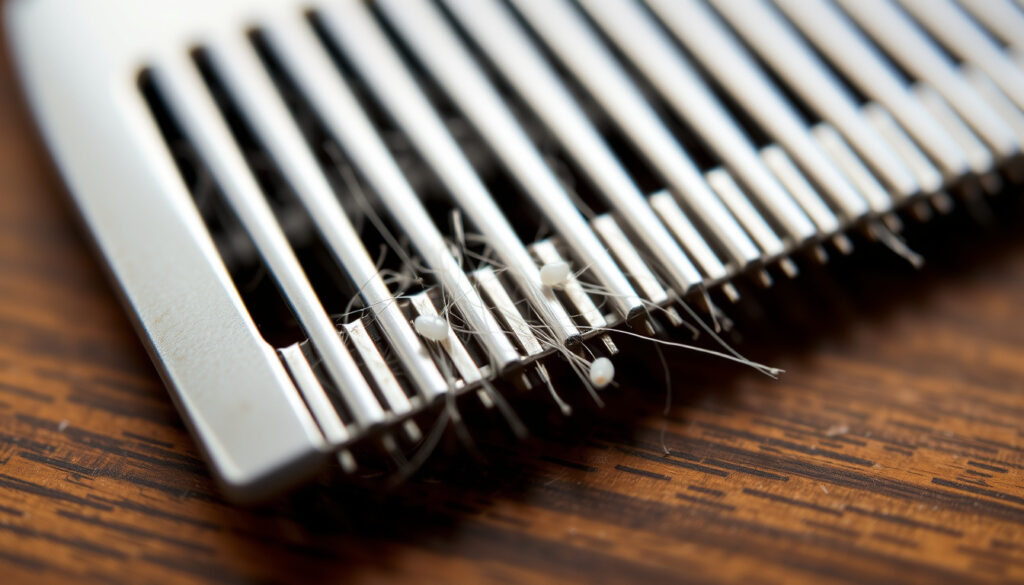
Early Lice in Hair: Spot Signs, Act Fast
Few things spark household panic like a note from school saying head lice were found. But catching it early — before the itching starts — can save you weeks of combing and worry. This guide helps you spot the first signs, tell nits from dandruff, and choose a treatment that actually works, with facts from the CDC, Mayo Clinic, and NHS.
Incubation before itching: 4 to 6 weeks · Nits attachment strength: Firmly cemented, cannot be flicked off · Adult life span on host: Up to 30 days · Lice movement: Cannot fly or jump
Quick snapshot
- Lice cannot fly or jump (CDC (public health authority))
- Nits are firmly attached to the hair shaft (Hopkins Medicine (research hospital))
- Itching may take 4–6 weeks to appear after first infestation (PMC review (medical research))
- Head-to-head contact is the primary mode of transmission (CDC (public health authority))
- How easily lice spread via pillows and bedding beyond 1–2 days (CDC (public health authority))
- Whether natural remedies like essential oils are reliably effective (Children’s Minnesota (pediatric hospital))
- Why some individuals with lice show no symptoms (PMC review (medical research))
- Exact percentage of cases resistant to standard treatments (CDC (public health authority))
- How quickly lice die after treatment – timeline varies (Mayo Clinic (medical center))
- Day 0: Head-to-head contact with infested person (CDC (public health authority))
- Day 7–10: Nits hatch; nymphs emerge (UC IPM (university extension))
- Week 4–6: Itching typically begins (PMC review (medical research))
- Check wet hair with a fine‑toothed comb (Mayo Clinic (medical center))
- Apply OTC permethrin or pyrethrin treatment (Cleveland Clinic (academic medical center))
- Repeat treatment after 7–10 days (Blackpool Teaching Hospitals NHS (UK hospital trust))
- Continue combing every 2–3 days for 2–3 weeks (HealthyChildren.org (AAP parent resource))
Five key facts that frame the challenge of early detection and treatment.
| Fact | Value |
|---|---|
| Incubation period for itching | 4–6 weeks |
| Nits glue strength | Extremely firm; cannot be flicked off |
| Adult lifespan on host | Up to 30 days |
| Lice off-host survival | 1–2 days |
| Most common age group | Children 3–11 years |
How do you know if you caught lice early?
Early symptoms of head lice
- A tickling feeling or sensation of something moving in the hair (Cleveland Clinic (academic medical center))
- Itching may not appear for 4 to 6 weeks after infestation (PMC review (medical research))
- Sores on the scalp from scratching may appear later (Cleveland Clinic (academic medical center))
How to check for lice at home
- Wet combing with conditioner and a fine‑toothed comb is the recommended detection method (Mayo Clinic (medical center))
- Finding live lice on the scalp is the clearest evidence of an active infestation (UC IPM (university extension))
- Check behind the ears and at the back of the neck, where nits are often found (West Yorkshire Healthier Together (NHS region))
Why itching may be delayed
- First infestation triggers a delayed hypersensitivity reaction; the immune system takes time to recognize lice saliva (PMC review (medical research))
- Many affected people have no symptoms at all (PMC review (medical research))
The implication: by the time you feel the itch, the infestation is already well established. Early detection depends on proactive combing, not waiting for symptoms.
What do lice look like in the beginning?
Appearance of nits (eggs)
- Nits are yellow, tan, or brown eggs firmly attached to the hair shaft near the scalp (CDC (public health authority))
- They are oval and glued to one side of the hair shaft; they cannot be flicked off like dandruff (Hopkins Medicine (research hospital))
Appearance of nymphs (young lice)
- Nymphs hatch from nits and are greyish‑white, about the size of a pinhead (UC IPM (university extension))
- They become adult lice within 7–10 days (CDC (public health authority))
Appearance of adult lice
- Adult lice are about the size of a sesame seed, tan to greyish‑white, with six legs (Cleveland Clinic (academic medical center))
- They move quickly and are hard to see without careful inspection (Mayo Clinic (medical center))
The catch: adult lice avoid light, so you often see nits before you see the insects themselves. That makes early nit detection critical.
What can be mistaken for lice?
Dandruff vs. nits
- Dandruff flakes are easily brushed off; nits are firmly attached (Hopkins Medicine (research hospital))
- Nits are oval and glued to one side of the hair shaft; dandruff is irregular and loose (Hopkins Medicine (research hospital))
Hair debris and product buildup
- Hair casts, lint, or scabs can resemble nits but are not glued to the hair (CDC (public health authority))
- Hair spray residue or gel flakes can also be mistaken for nits but wash away easily (UC IPM (university extension))
Other scalp conditions
- Scalp eczema or psoriasis can cause flaking that may be mistaken for lice (Cleveland Clinic (academic medical center))
- These conditions do not involve eggs glued to hair shafts (Hopkins Medicine (research hospital))
Treating a case of mistaken identity (dandruff for nits) means unnecessary chemical exposure. The simple glue‑and‑slide test separates them: if it doesn’t slide off when pulled, it’s likely a nit.
The pattern: false positives waste time and money. A quick check with a fine‑toothed comb and good lighting often saves the headache.
What kills head lice quickly?
Over‑the‑counter lice treatments
- OTC treatments often contain permethrin or pyrethrin; follow package directions (Cleveland Clinic (academic medical center))
- Some treatments kill only live lice; a second treatment after 9–10 days is often needed to kill newly hatched nymphs (Blackpool Teaching Hospitals NHS (UK hospital trust))
- Manual removal with a fine‑toothed comb is essential even after chemical treatment (Mayo Clinic (medical center))
Prescription treatments
- Prescription treatments like ivermectin or spinosad may be used for resistant cases (Cleveland Clinic (academic medical center))
- Benzyl alcohol lotion is another prescription option (Cleveland Clinic (academic medical center))
Manual removal methods
- Wet combing with conditioner and a fine‑toothed comb can remove lice and is recommended as a treatment approach (Mayo Clinic (medical center))
- Comb every 2–3 days for 2–3 weeks after treatment to remove remaining nits (HealthyChildren.org (AAP parent resource))
- The NHS‑backed guidance from England described wet combing as the most effective way of treating and preventing head lice in its 2023 advice update (NHS England (national health service))
No medicine is 100% effective (Children’s Minnesota (pediatric hospital)). Do not start treatment unless a living, moving louse is found (Blackpool Teaching Hospitals NHS (UK hospital trust)).
Why this matters: speed matters, but accuracy matters more. Using the wrong treatment or skipping the second dose guarantees a return visit from the lice.
What triggers head lice?
How head lice spread (head‑to‑head contact)
- Head lice are spread mainly by direct head‑to‑head contact (CDC (public health authority))
- Lice cannot fly or jump; they crawl (Cleveland Clinic (academic medical center))
- Lice are more active at night, which can cause difficulty sleeping (Cleveland Clinic (academic medical center))
Can lice live on pillows and bedding?
- Lice can survive off the host for about 1–2 days; transmission via pillows is possible but less common (CDC (public health authority))
- Washing bedding in hot water and drying on high heat can kill any surviving lice or nits (CDC (public health authority))
Risk factors for infestation
- Children aged 3–11 are most commonly affected, but anyone can get lice (CDC (public health authority))
- Lice do not discriminate by hair cleanliness; they affect all hair types (Cleveland Clinic (academic medical center))
- Close contact activities like sleepovers, sports, and shared lockers increase risk (CDC (public health authority))
Parents of young schoolchildren are the primary audience: weekly wet‑comb checks, especially after sleepovers, are the most reliable prevention.
The pattern: transmission is almost always direct contact. Fomite spread is rare, so focusing on head‑to‑head hygiene beats obsessing over pillows.
Step‑by‑step: How to check for and treat head lice
- Check wet hair – Apply conditioner to wet hair and comb with a fine‑toothed detection comb from root to tip (Mayo Clinic (medical center)).
- Confirm infestation – Only start treatment if you find a living, moving louse (Blackpool Teaching Hospitals NHS (UK hospital trust)).
- Apply treatment – Use an OTC product containing permethrin or pyrethrin as directed (Cleveland Clinic (academic medical center)).
- Remove nits – After treatment, use a fine‑toothed comb to remove nits and dead lice (HealthyChildren.org (AAP parent resource)).
- Repeat after 7–10 days – A second treatment kills newly hatched nymphs (Blackpool Teaching Hospitals NHS (UK hospital trust)).
- Continue combing – Comb every 2–3 days for 2–3 weeks to ensure no live lice remain (Mayo Clinic (medical center)).
Timeline of a head lice infestation
- Day 0: Head‑to‑head contact with an infested person; lice may transfer (CDC (public health authority))
- Day 0–7: Female lice begin laying eggs (nits) near the scalp (UC IPM (university extension))
- Day 7–10: Nits hatch; nymphs emerge (UC IPM (university extension))
- Day 10–14: Nymphs mature into adult lice; reproduction continues (CDC (public health authority))
- Week 4–6: Itching typically begins (first infestation); infestation may be well established (PMC review (medical research))
- Ongoing: Without treatment, lice continue to reproduce every 2–3 weeks (CDC (public health authority))
Confirmed facts
- Lice cannot fly or jump (CDC (public health authority))
- Nits are firmly attached to the hair shaft (Hopkins Medicine (research hospital))
- Itching may take 4–6 weeks to appear after first infestation (PMC review (medical research))
- Head‑to‑head contact is the primary mode of transmission (CDC (public health authority))
- OTC permethrin treatments are effective for most cases (Cleveland Clinic (academic medical center))
What’s unclear
- How easily lice spread through pillows and bedding beyond 1–2 days (CDC (public health authority))
- Whether natural remedies like essential oils are reliably effective (Children’s Minnesota (pediatric hospital))
- Why some individuals with lice show no symptoms (PMC review (medical research))
- Exact percentage of cases resistant to standard treatments (CDC (public health authority))
- How quickly lice die after treatment – timeline varies (Mayo Clinic (medical center))
“Itching can take 4 to 6 weeks to start after the initial infestation.”
— Mayo Clinic (2023)
“Lice are small, wingless insects that feed on human blood; they cannot fly or jump.”
— Centers for Disease Control and Prevention (CDC)
“Nits are firmly attached to the hair shaft and are not easily removed, unlike dandruff.”
— Hopkins Medicine
For parents of school‑age children, the choice is clear: weekly wet‑comb checks and prompt treatment at the first sign of a live louse will keep infestations short and stress low. Skip the home‑remedy guesswork and stick with methods backed by the CDC, NHS, and pediatric hospitals — or face weeks of repeat combing.
northwestfamilyclinics.com, npr.org, healthychildren.org, nottsapc.nhs.uk
Frequently asked questions
Can lice live on pillows after treatment?
Lice can survive off the host for about 1–2 days. Washing pillows in hot water and drying on high heat will kill any remaining lice or nits. Transmission via pillows is possible but less common than direct head‑to‑head contact.
How often should I check my child for lice?
The CDC recommends checking children once a week, especially if they have had recent head‑to‑head contact. Wet combing with conditioner is the most reliable method.
Does lice treatment kill nits as well?
Most OTC treatments kill live lice but may not kill all nits. A second treatment after 7–10 days is needed to kill newly hatched nymphs. Manual removal with a fine‑toothed comb is also important.
Is it necessary to treat the whole family?
Only treat those who have a confirmed infestation (a living, moving louse). Treating family members without signs of lice is not recommended and can lead to unnecessary chemical exposure.
Can I use home remedies like mayonnaise to kill lice?
No. There is no reliable evidence that home remedies like mayonnaise, olive oil, or petroleum jelly effectively kill lice. The CDC and NHS recommend evidence‑based treatments like permethrin or wet combing.
When should I see a doctor for head lice?
If OTC treatments have been applied correctly twice (with a 7–10 day interval) and live lice remain, consult a doctor. Prescription treatments like ivermectin or spinosad may be needed. Also see a doctor if the scalp becomes infected from scratching.
Are lice more common in dirty hair?
No. Lice do not prefer clean or dirty hair; they infest all hair types equally. Hair hygiene is not a risk factor for lice.
Meer gerelateerde berichten
 Best Translator Spanish to English: Accurate & Free Options
 Pain on Left Side of Stomach: Causes, Symptoms, and When to Worry
 Squatter’s Rights 30 Days: What Property Owners Need to Know
 Costa Rica National Football Team: Players, Fixtures, Ranking
 Katie Douglas Movies and TV Shows: Full Filmography & Bio
 Miranda Cosgrove Movies and TV Shows – Full Filmography List
 Magna Cum Laude GPA Requirements and Thresholds Explained
 Valvoline Oil Change Coupon 50% Off: Redeem, Prices & Tips