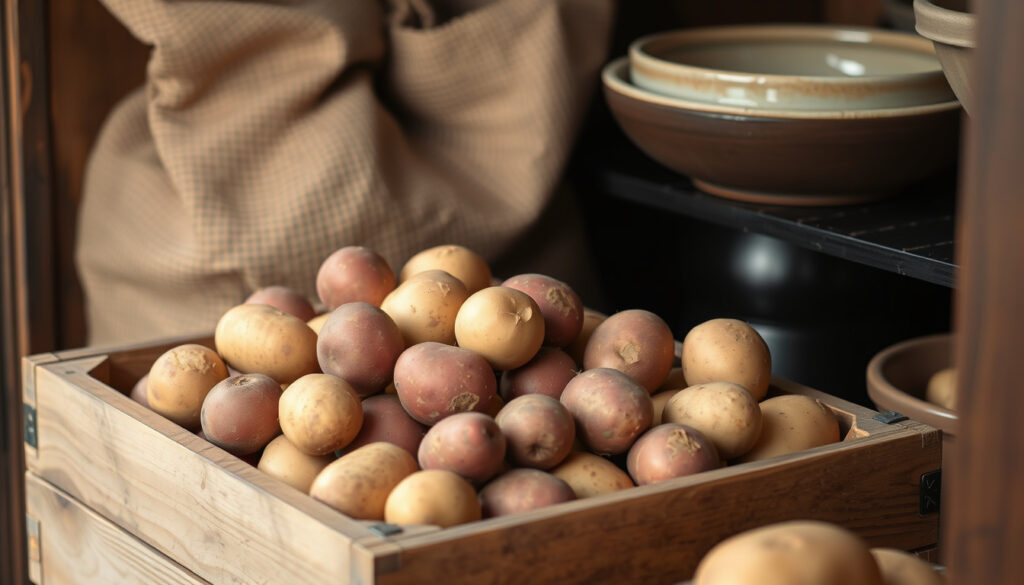
How Long Do Potatoes Last? Shelf Life & Storage Tips
Anyone who’s bought a bag of potatoes only to find them sprouting a week later knows the frustration — but the truth is simpler: how long potatoes last depends almost entirely on where and how you store them. Under the right conditions, raw potatoes can stay fresh for up to two months in a cool, dark pantry, and this article breaks down the exact timelines for pantry, fridge, and freezer storage, plus the sensory cues to know when to toss a potato.
Pantry storage (raw): 1–2 months ·
Refrigerator storage (raw): 1–2 weeks ·
Cooked potatoes (refrigerated): 3–4 days ·
Freezer storage (cooked): Up to 12 months
Quick snapshot
- Pantry storage extends raw potato shelf life to 1–2 months (Food Network (cooking essentials guide)).
- Refrigerator storage shortens raw potato life because cold converts starch to sugar (Healthline (nutrition resource)).
- Precise shelf life varies by potato variety (e.g., Yukon Gold vs. Russet) with limited published data (Ask Extension (university extension service)).
- Effect of specific humidity levels on sprouting rates is not widely quantified (EUFIC (food safety authority)).
- Small sprouts on potatoes: safety after removal is disputed; some sources say safe, others advise caution if potato is soft (Healthline (nutrition resource)).
- Green skin and solanine levels: toxicity thresholds are not precisely defined for all potato varieties (EUFIC (food safety authority)).
- Potatoes stored at room temperature (68°F) show sprouting and wrinkling in 2–3 weeks (Reencle (sustainable living guide)).
- In a 45–50°F pantry, potatoes remain firm and edible for 1–2 months (Food Network (cooking essentials guide)).
- Check your storage spot: ideal is 45–50°F, dark, and ventilated. Ditch plastic bags (EUFIC (food safety authority)).
- Use the sensory guide below to catch spoilage before it spreads. (EUFIC (food safety authority))
Key storage facts at a glance.
| Storage factor | Value |
|---|---|
| Optimal storage temperature | 45–50°F (7–10°C) |
| Pantry shelf life (raw) | 1–2 months |
| Fridge shelf life (raw) | 1–2 weeks |
| Cooked shelf life (refrigerated) | 3–4 days |
| Freezer shelf life (cooked) | Up to 12 months |
How do you know if a potato has gone bad?
Visual signs: mold, discoloration, green skin
Look for dark spots, patches of mold, and green tinges on the skin. Green skin indicates solanine, a natural toxin that develops when potatoes are exposed to light. According to Healthline (nutrition resource), extensive greening means the potato should be discarded. EUFIC (food safety authority) adds that mold or rot are clear signs of spoilage.
Textural signs: softness, wrinkling, shriveling
A fresh potato is firm and smooth. If it feels soft, mushy, or oozes liquid, it’s spoiled. Food Network (cooking essentials guide) warns that shriveled skin and a rubbery texture mean the potato has lost too much moisture and is past its prime.
Olfactory signs: musty or sour odor
Fresh potatoes have a faint earthy smell. A musty, sour, or yeasty odor signals bacterial or fungal growth. Healthline (nutrition resource) lists foul odor as a definitive indicator that the potato should be thrown away.
A few small, firm sprouts are fine to remove — but if the potato is soft, green, or smells off, composting is safer than cooking.
The implication: Knowing these signs helps you avoid wasting potatoes or risking food safety.
Do potatoes last longer in the fridge or in a cupboard?
Pantry storage: cool, dark, ventilated (1–2 months)
When kept at 45–50°F in a dark, breathable container, whole raw potatoes can last 1–2 months. Reencle (sustainable living guide) reports that room-temperature storage shortens this to 1–2 weeks, while proper pantry conditions extend it significantly. EUFIC (food safety authority) notes that an ideal range is 7–12°C (45–54°F).
Refrigerator storage: cold temperature (1–2 weeks)
Refrigerating raw potatoes slows respiration but triggers starch-to-sugar conversion, causing a sweet taste and darker cooking. Food Network (cooking essentials guide) advises that raw potatoes last only 1–2 weeks in the fridge and should be used for boiling, not frying, to avoid off-flavors.
Three storage conditions, one clear loser for raw potatoes: the fridge. Here’s how they stack up.
| Factor | Pantry (45–50°F) | Fridge (35–40°F) |
|---|---|---|
| Shelf life (raw) | 1–2 months | 1–2 weeks |
| Temperature | 45–50°F (7–10°C) | 35–40°F (2–4°C) |
| Humidity needed | 85–90% | Low (fridge dries air) |
| Ventilation | Breathable (mesh, paper) | Plastic bags trap moisture |
| Effect on taste | Neutral | Starch converts to sugar — sweeter, darker |
The implication: for long-term storage, a cool, ventilated pantry wins. The fridge is a fallback only if no cool space exists.
What is the best way to store potatoes so they last the longest?
- Choose a cool, dark, dry spot. Aim for 45–50°F (7–10°C). A basement, cellar, or cupboard away from the stove works. Ask Extension (university extension service) recommends 40°F with 85–90% relative humidity for longest life.
- Use breathable containers. Mesh bags, paper sacks, or cardboard boxes allow air circulation. Food Network (cooking essentials guide) warns against lidded containers or resealable plastic bags that trap moisture and speed spoilage.
- Keep potatoes away from onions. Onions emit ethylene gas, which accelerates sprouting. Store them separately.
- Don’t wash until ready to use. Moisture promotes mold and rot. Brush off dirt but keep skin dry.
- Check regularly. Remove any sprouted or soft potatoes immediately to prevent decay from spreading.
A properly stored potato can last 2–4 months, but a single bad spud can spoil the whole bag. Regular inspection is the cheapest insurance.
The pattern: Consistent storage conditions prevent rapid spoilage.
How long do raw potatoes last?
Pantry shelf life by potato variety
Late-season potatoes stored at 40°F with high humidity can keep 2–4 months, according to Ask Extension (university extension service). Russets and Yukon Golds have similar durability under optimal conditions. Waxy varieties like red potatoes may have slightly shorter windows, but published data is sparse.
Refrigerator shelf life
Raw potatoes in the fridge last 1–2 weeks. Reencle (sustainable living guide) notes that temperatures below 45°F accelerate sugar conversion, so fridge storage is best reserved for short-term use.
Factors affecting shelf life (temperature, humidity, damage)
Temperature spikes above 70°F cut shelf life to about a week (Food Network (cooking essentials guide)). Bruised or cut potatoes spoil faster because damaged tissue invites microbes. High humidity (85–90%) keeps potatoes from shriveling, but too much moisture breeds mold (EUFIC (food safety authority)).
Can you cook a potato that has sprouted?
Small sprouts vs. large sprouts
Small, firm sprouts that are less than 1 cm long can be safely removed with a paring knife, and the potato is fine to cook. Healthline (nutrition resource) explains that large, shriveled sprouts indicate the potato is degrading and should be discarded.
Removing sprouts before cooking
Cut off the sprouts and a thin layer around them. If the potato remains firm and shows no green patches, it’s safe. For extra caution, peel the potato entirely.
Green skin and solanine
Green skin means solanine has developed. Healthline (nutrition resource) warns that eating large amounts of solanine can cause nausea and headaches. If the potato is more than 10% green or tastes bitter, throw it away.
Sprouting alone isn’t dangerous — but green skin is a non-negotiable red flag. When in doubt, toss it.
The catch: When in doubt, discard to avoid solanine poisoning.
Timeline of potato spoilage
- Day 1 (harvest): Potato at peak quality; begins natural respiration and moisture loss. (Ask Extension (university extension service))
- 2–3 weeks (room temp at 68°F): Signs of sprouting and wrinkling appear (Reencle (sustainable living guide)).
- 1–2 months (pantry at 45–50°F): Potatoes remain firm and edible (Food Network (cooking essentials guide)).
- 3–4 months: Risk of spoilage increases; potatoes may become soft, sprout heavily, or rot (Ask Extension (university extension service)).
What this means: The longer you store, the more vigilant you need to be.
What we know and what’s not known
Confirmed facts
- Pantry storage extends raw potato shelf life to 1–2 months (Food Network (cooking essentials guide)).
- Refrigerator storage shortens raw potato life due to starch conversion (Healthline (nutrition resource)).
What’s unclear
- Precise shelf life differences between potato varieties (e.g., Russet vs. Yukon Gold) are not well-documented in public research (Ask Extension (university extension service)).
- The effect of specific humidity percentages on sprouting rates lacks wide quantification (EUFIC (food safety authority)).
- Sprouted potatoes with small sprouts: safety after removal is not universally agreed upon; some sources say safe, others advise caution if the potato is soft (Healthline (nutrition resource)).
- Green skin or extensive sprouting: the precise solanine threshold for toxicity is not consistently defined across all potato types (EUFIC (food safety authority)).
The pattern: Despite gaps in data, the core advice is consistent.
Expert perspectives
“Storing potatoes in a cool, dark pantry with good air circulation can extend their shelf life by weeks.”
“Keep potatoes separate from onions and never store them in the fridge unless you want sweet, oddly colored chips.”
“Room temperature storage accelerates sprouting; a dedicated root cellar or cool cupboard is worth the effort.”
Editor’s note: These quotes represent the general guidance from each publication’s editorial team on potato storage best practices.
For home cooks, the choice is clear: a cool, dark pantry trumps the fridge for raw potatoes, but once cooked, the fridge buys you three to four days. Stick to that, and you’ll waste fewer spuds.
journeywithjill.net, corporate.iga.com, sustainablemarketfarming.com, medicalnewstoday.com, youtube.com, pmc.ncbi.nlm.nih.gov, youtube.com
Frequently asked questions
Are potatoes safe to eat if they have small sprouts?
Yes. Small, firm sprouts can be removed with a knife, and the potato is safe to cook. Large, shriveled sprouts indicate degradation and the potato should be discarded (Healthline).
Why do potatoes turn green?
Green skin develops when potatoes are exposed to light. The green color is chlorophyll, but it often coincides with solanine, a natural toxin. Discard potatoes with extensive greening (EUFIC).
Can you store potatoes in the refrigerator to keep them fresh longer?
You can, but it shortens their shelf life to 1–2 weeks and changes the flavor due to starch-to-sugar conversion. A cool pantry is better for long-term storage (Food Network).
How should you store cooked potatoes for maximum freshness?
Refrigerate cooked potatoes in an airtight container within two hours of cooking. They stay fresh for 3–4 days (Food Network).
What happens if you eat a potato that has gone bad?
Eating a spoiled potato can cause mild digestive upset. Solanine from green potatoes may cause nausea, vomiting, or headache. Discard any potato that shows signs of rot or extensive greening (Healthline).
Do potato storage bags or containers make a difference?
Yes. Breathable bags (mesh, paper, or cardboard) prevent moisture buildup and extend shelf life. Plastic bags trap humidity and promote mold and rot (Food Network).
Is it okay to freeze raw potatoes?
Freezing raw potatoes is not recommended because the high water content causes a mushy texture upon thawing. Cooked potatoes can be frozen for up to 12 months (Food Network).
Meer gerelateerde berichten
 Will IRS Distribute $3000 Tax Refunds in June 2025?
 Massachusetts Institute of Technology: Rankings, MIT vs Harvard
 Best Translator Spanish to English: Guide to Accurate Tools
 How Much is Urban Air Per Child? Pricing by Location
 Galaxy M53 to Buy: Best Refurbished Deals in Ireland
 Pink Salt Weight Loss Recipe: TikTok Trick Explained
 Kubo and the Two Strings: Plot, Cast, Kids Guide & More
 Cleaning Services Near Me in Ireland: Prices and Expectations