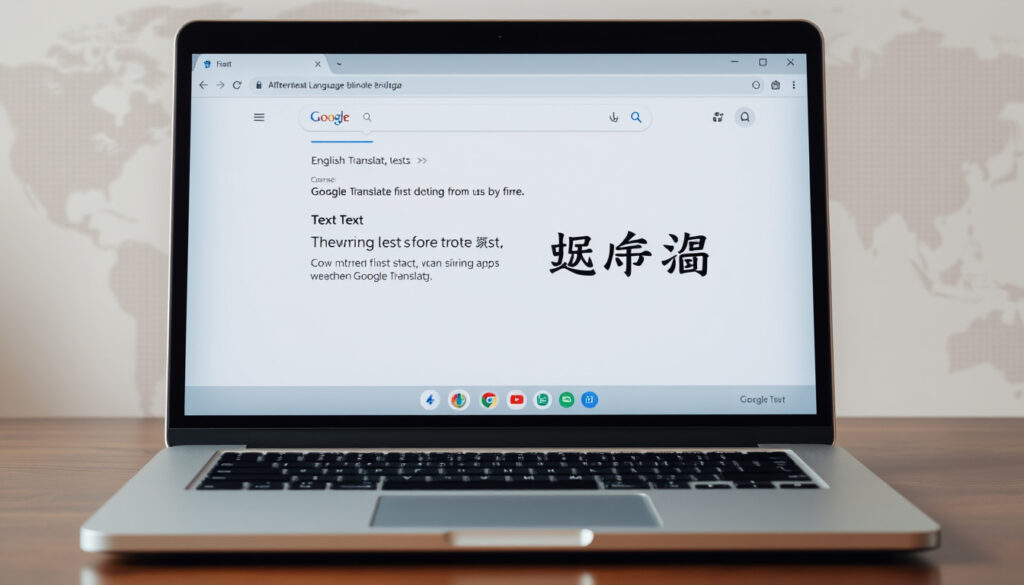
Google Translate English to Chinese: Guide & Alternatives
Google Translate and DeepL dominate English-to-Chinese machine translation, but their accuracy varies significantly by use case. A 2025 Frontiers study found ChatGPT outperformed both on Chinese tourism texts, while Intento benchmarks show DeepL leads in 65% of language pairs overall—yet Google Translate edges ahead specifically for Mandarin Chinese. This guide compares these tools, their limitations, and when human review becomes essential.
Languages Supported: Over 100 | Text Translation Languages: 108 | Total Language Pairs: Up to 249 | Platforms: Web, Android, iOS | Free Access: Yes
Quick Snapshot
Google Translate
- Free web/app access
- Supports 108 text languages and 249+ total language pairs
- Offline packs available for Chinese
- Custom glossaries via API
- Better accuracy for Mandarin Chinese per Intento benchmark Source: Lokalise
DeepL
- 36 languages including Chinese, Japanese, Korean
- 10 errors vs Google’s 25 in professional evaluation per Intento Source: Taia
- AI glossary generator and tone selection (formal/informal)
- Better idioms and nuance handling for European languages Source: TranslatePress
- No translation memory, limiting consistency for long documents Source: Taia
Systran
- Free Chinese translation online
- Enterprise-focused translation memory
- Alternative for users seeking free options
ChatGPT
- Outperformed Google Translate and DeepL on Chinese tourism texts in fidelity, fluency, and cultural sensitivity per Frontiers study Source: Frontiers in AI
- Strong contextual understanding
- Available via API for developers
Key Facts
| Attribute | Value | Source |
|---|---|---|
| Google Translate languages supported | 249+ (2026) | Taia |
| DeepL languages supported | 36 (2026) | Taia |
| Intento benchmark: DeepL top performance | 65% of language pairs | Smartling |
| UCLA study: Google accuracy range | 55-94% | Lokalise |
| Professional eval: DeepL errors | 10 | Taia |
| Professional eval: Google errors | 25 | Taia |
| DeepL strength languages | European | Smartling |
| Google Translate strength languages | Mandarin Chinese | Lokalise |
| Google language expansion goal | 1,000 languages (announced 2022) | Smartling |
| ChatGPT vs others Chinese tourism | Superior fidelity/fluency/culture | Frontiers in AI |
What is the most accurate translator from English to Chinese?
For English-to-Chinese translation specifically, the answer depends on your use case. Google Translate outperforms DeepL for Mandarin Chinese according to Intento’s industry benchmark, while DeepL produces fewer translation errors overall (10 vs 25) in professional evaluations (Taia, 2026). A 2025 Frontiers study found ChatGPT surpassed both tools on Chinese tourism texts, excelling in fidelity, fluency, and cultural sensitivity (Frontiers in AI).
Google Translate vs DeepL
Google Translate covers 249+ languages versus DeepL’s 36, but DeepL leads in European language quality—CSA Research confirms DeepL outperforms Google for English-German, English-French, and English-Spanish translations (Language IO). For Mandarin specifically, Google holds the edge per Intento’s cross-language benchmark (Lokalise).
Both services struggle with isolated terms and idiomatic expressions; human review remains necessary for critical documents (Lokalise).
Factors affecting accuracy
Translation accuracy depends heavily on data availability for the target language. Google Translate’s accuracy ranges from 55% to 94% in medical instructions per UCLA study (Lokalise). DeepL handles idioms and nuance better in supported languages due to training on Linguee’s human translations (TranslatePress), while Google tends toward more literal translations (Taia).
“DeepL produced fewer translation errors—about 10 issues vs Google’s 25 in professional evaluation.”
— Taia analysis, based on Intento benchmark data
Tip: For business content requiring nuance, DeepL’s AI glossary generator and formal/informal tone selection provide customization that Google lacks in its consumer-facing product (Smartling).
TL;DR: DeepL delivers better European language quality with fewer errors, but Google Translate outperforms for Mandarin Chinese and offers broader language coverage. ChatGPT leads for culturally sensitive Chinese tourism content.
Are there any free Chinese translators?
Google Translate remains the most accessible free option, offering full web and mobile access with no usage limits (Taia). Systran also provides free online Chinese translation for users preferring an alternative (iFLYTEK). ChatGPT’s free tier handles basic English-Chinese translations, though API access requires payment.
Google Translate features
Google Translate offers tap-to-translate functionality, offline language packs, camera translation, and conversation mode. The service recently improved context handling for longer passages (Taia). Custom glossaries are available via the API for developers needing consistent terminology (Smartling).
Systran free Chinese translation
Systran provides free online translation including Chinese, positioning itself as an enterprise-focused alternative. It includes translation memory features that help maintain consistency across large documents (Taia).
Note: Free tools lack the customization and consistency features of paid enterprise solutions. For ongoing business translation needs, evaluate API costs versus manual revision time.
How to speak “I love you” in Mandarin?
The most common translation is ” ” (wǒ ài nǐ). Machine translators handle basic phrases accurately, though contextual variations exist depending on formality and relationship.
Standard translations
Google Translate correctly renders “I love you” as ” ” for simplified Chinese. The same phrase in traditional Chinese appears as ” “. Both are universally understood across Chinese-speaking regions.
Contextual variations
More nuanced expressions include ” ” (wǒ xǐhuān nǐ) for “I like you,” appropriate for earlier relationship stages. For formal contexts, ” ” conveys deeper romantic intent. The Frontiers study noted that ChatGPT handles these contextual distinctions better than rule-based translators (Frontiers in AI).
“ChatGPT outperformed its counterparts across all metrics—fidelity, fluency, and cultural sensitivity—for Chinese tourism texts.”
— Frontiers in AI study authors, 2025
Translate from English to Chinese with DeepL
DeepL supports Chinese translation through its web interface, desktop apps, and API. The service handles both simplified and traditional Chinese characters.
Steps to use DeepL
- Visit deepl.com or open the DeepL app
- Select English as source language
- Select Chinese (either Simplified or Traditional)
- Paste or type your English text
- Review the translation and use glossary tools if needed
- Export via copy, download, or API integration
Comparison to Google
DeepL offers AI-powered tone selection (formal/informal) and glossary generation that Google Translate lacks in its consumer product (Smartling). However, DeepL supports only 36 languages versus Google’s 249+, and Google outperforms DeepL specifically for Mandarin Chinese per Intento benchmark (Lokalise).
Warning: DeepL shows declining quality in some pairs like Japanese per recent user feedback. Test translations carefully for critical content (Taia).
How to use Google Translate for English to Chinese?
Google Translate handles English-to-Chinese translation through its web interface, mobile apps, and browser extensions.
Web version steps
- Navigate to translate.google.com
- Choose English as source language from dropdown
- Choose Chinese (Simplified or Traditional)
- Type or paste English text
- View instant Chinese translation
- Use the copy button to transfer translation
- Access pronunciation guides and conversation mode if needed
App features
The Google Translate mobile app (available for Android and iOS) offers camera-based translation for printed text, offline language pack downloads for Chinese, and real-time conversation mode. Tap-to-translate works across apps without switching screens (Taia).
Note: Offline Chinese language packs require downloading before traveling without internet access. Microsoft Translator offers similar offline capabilities, covering approximately 100 languages (Taia).
Translation Tools Comparison
The following table compares key features across the major English-to-Chinese translation options. Bekijk deze handige gids over vertaaltools, inclusief Gratis Arabisch naar Engels vertalen. Gratis Arabisch naar Engels vertalen
| Feature | Google Translate | DeepL | ChatGPT | Microsoft Translator |
|---|---|---|---|---|
| Languages supported | 249+ | 36 | Limited by model | ~100 |
| Chinese support | Simplified & Traditional | Simplified & Traditional | Yes | Yes |
| Free access | Yes | Limited | Basic tier | Yes |
| Offline mode | Yes | No | No | Yes |
| Idiom handling | Literal | Natural | Contextual | Limited |
| API availability | Yes | Yes | Yes | Yes |
| Glossary/customization | API only | AI generator | Prompt-based | Limited |
| Professional errors | 25 | 10 | Variable | Higher |
The implication: DeepL produces fewer professional errors but limited language support. Google offers broader coverage with slightly lower Mandarin accuracy. ChatGPT excels at contextual Chinese tourism content.
Technical Specifications
These specifications help developers and enterprise users evaluate API integration options.
| Specification | Google Translate | DeepL |
|---|---|---|
| Developer | DeepL SE | |
| Launch platform | Web | Web |
| Mobile availability | Android & iOS | Desktop apps |
| Free tier access | Full access | Limited |
| API pricing | Per character tiered | Per character tiered |
| Training data source | Multiple sources | Linguee human translations |
| Accuracy benchmark | 55-94% (varies) | 65% top (Intento) |
When is human review necessary?
Despite AI improvements, machine translation still struggles with isolated technical terms, industry-specific jargon, and culturally nuanced content. A UCLA study found Google Translate accuracy ranged from 55% to 94% in medical instructions (Lokalise)—wide variation that makes human review essential for healthcare, legal, and official documents.
DeepL’s lack of translation memory limits consistency across long documents (Taia), creating repeated terminology inconsistencies that professional human translators would catch. Blind tests consistently show DeepL scoring higher than Google overall (MachineTranslation), but absolute accuracy still falls short of certified translation requirements.
Tip: For regulated industries (medical, legal, government), post-edit machine translation (PEMT) combines AI speed with human quality assurance, reducing costs by 60-80% versus pure human translation while meeting accuracy standards.
TL;DR: Human review remains necessary for legal, medical, and official Chinese translations despite AI improvements. Both Google and DeepL show variable accuracy (55-94%), and neither has translation memory for consistent long-form documents.
Regional Language Variations
English-to-Chinese translation involves distinct regional variants that affect tool choice.
For European languages, DeepL consistently outperforms Google in accuracy and nuance per CSA Research (Language IO). For Mandarin Chinese specifically, Google Translate holds an edge over DeepL per Intento benchmark (Lokalise). Less common languages like Swahili, Hindi, and regional dialects remain available only through Google Translate, which supports 249+ languages versus DeepL’s 36 (Taia).
“DeepL was the top-performing engine in 65% of language pairs tested.”
— Intento benchmark, as reported by Smartling
Note: Google Translate announced plans in 2022 to expand to 1,000 languages using AI advancement (Smartling). DeepL’s 2026 update added Chinese to its 36-language portfolio (Taia).
Choosing the Right English-to-Chinese Tool
Select Google Translate for broad language coverage, offline mobile use, and Mandarin Chinese accuracy. Choose DeepL for European language quality, formal tone control, and professional document translation with fewer errors. Consider ChatGPT for culturally sensitive content requiring contextual understanding (Frontiers in AI).
For enterprise use, Microsoft Translator provides a mid-tier option covering approximately 100 languages with decent quality for customer service applications (Taia). Taia positions itself as a file translation alternative with better consistency for document batches (Taia).
What this means: The best tool depends on your specific Chinese variant needs (simplified vs traditional), required accuracy level, budget constraints, and whether offline access matters. Test translations with representative content before committing to any tool for critical projects.
Google Translate handles English to Chinese well for everyday needs, but this comprehensive app guide adds practical tips on offline features and accuracy tweaks.
Frequently Asked Questions
How do I access Google Translate English to Chinese?
Visit translate.google.com on any browser, or download the Google Translate app from the Android Play Store or iOS App Store. Select English as source language and Chinese (Simplified or Traditional) as target, then type or paste your text for instant translation.
Does Google Translate work offline for Chinese?
Yes. Google Translate offers offline language packs that you can download before traveling. Once downloaded, the app translates Chinese without internet connection. This feature works on both Android and iOS versions.
What are limitations of machine translation to Chinese?
Machine translation for Chinese struggles with isolated technical terms, idiomatic expressions, and culturally nuanced content. A UCLA study found accuracy ranging from 55% to 94% depending on content type. Neither Google nor DeepL provides translation memory for consistent long-form documents.
Can Google Translate handle dialects?
Google Translate primarily handles standard Mandarin (Simplified and Traditional Chinese). It offers limited support for Cantonese and other regional dialects. DeepL’s Chinese support is similar. For dialect-specific translation, human translators with regional expertise remain necessary.
How to translate documents English to Chinese?
For short documents, copy-paste text into Google Translate or DeepL web interface. For longer documents, consider Google Translate’s document upload feature, DeepL’s API integration, or Taia for batch file processing with better consistency. Always review machine-translated documents for accuracy before official use.
Is Google Translate safe for sensitive translations?
Google Translate is not recommended for legally binding, medical, or confidential documents. The service processes data through Google’s servers and may retain translations for quality improvement. Use professional translation services or API solutions with data retention policies that meet your compliance requirements.
What apps compete with Google Translate?
DeepL offers higher accuracy for European languages and professional documents but supports fewer languages (36 vs 249+). Microsoft Translator provides offline capability across ~100 languages. ChatGPT handles contextual Chinese tourism content well. iFLYTEK focuses on Asian language performance.
Confirmed Facts
- Google Translate supports English-Chinese translation via web, app, and API (Taia)
- Google Translate outperforms DeepL for Mandarin Chinese per Intento benchmark (Lokalise)
- DeepL produces 10 errors vs Google’s 25 in professional evaluation per Intento (Taia)
- Google Translate supports 249+ languages versus DeepL’s 36 languages (Taia)
- ChatGPT outperforms Google Translate and DeepL for Chinese tourism text fidelity, fluency, and cultural sensitivity (Frontiers in AI)
What’s Unclear
- Specific English-to-Chinese accuracy percentages from independent 2025-2026 benchmarks
- Direct head-to-head tests for Simplified vs Traditional Chinese variants
- Cost comparisons for enterprise API pricing between providers
- Performance on Cantonese and regional dialects
- Latest post-2026 updates on DeepL language expansion plans
Related on this site: Google Translate vs DeepL for English to Chinese | Alternatives to Google Translate for Chinese translations
Meer gerelateerde berichten
 Seattle Mariners vs Detroit Tigers Match Player Stats
 Costa Rica National Football Team: Players, Fixtures, Ranking
 Aston Villa vs Arsenal: Score, Prediction, H2H Stats & TV Guide
 Tiana’s Bayou Adventure Opening Date: Key Info & Specs
 RV Parks Near Me: Ireland Campsites & Free Parking Guide
 The Summer Hikaru Died: BL Debate, LGBTQ+ Themes & Season 2
 V/H/S Franchise Guide: Scare Factor, Watching Order, and Worth
 Anna’s Wild Yam Cream: Does It Work? Benefits, Side Effects