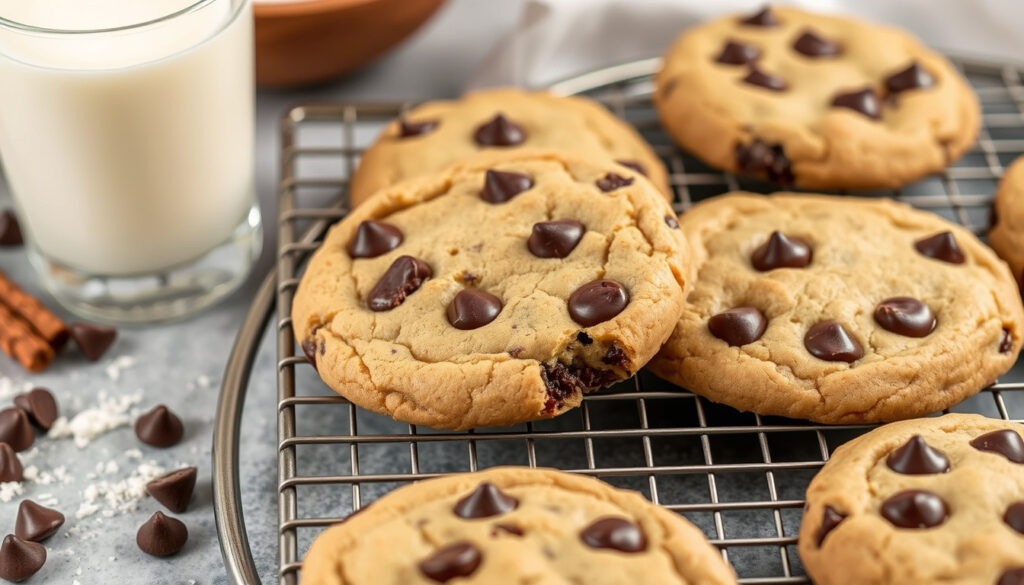
Soft Chocolate Chip Cookie Recipe: Chewy, Gooey Secrets
Ask any baker what makes a chocolate chip cookie truly special, and you’ll hear the same word: soft. Not crisp, not thin, not burnt around the edges—just that pillowy, almost-gooey center that keeps you reaching for another. This article cracks the chemistry behind moisture retention, explains exactly which ingredients and techniques produce soft cookies every time, and gives you a step-by-step recipe that works. No gimmicks, just science and tested methods from trusted baking sources.
Baking temperature: 350°F ·
Bake time: 10-12 minutes ·
Yield: 24 cookies ·
Prep time: 15 minutes ·
Chill time (optional): 30 minutes ·
Key moisture ingredient: Brown sugar
Quick snapshot
- Brown sugar absorbs roughly 2× more moisture than white sugar (Live Well Bake Often)
- Melted butter (not creamed) produces chewier texture (Sally’s Baking Addiction)
- Underbaking by 1-2 minutes retains internal moisture (King Arthur Baking)
- Optimal chill time varies widely by recipe (30 minutes vs 8 hours) – Sally’s Baking Addiction suggests 30 minutes to 2 hours, while Scientifically Sweet recommends 8+ hours
- Exact flour-to-fat ratio for softness depends on flour protein content (King Arthur Baking)
- Chill dough at least 2 hours for chewiness; 8+ hours deepens flavor (Scientifically Sweet)
- Bake at 325°F for 13-14 minutes for extra soft centers (Scientifically Sweet)
- Store with a slice of bread to restore moisture overnight (The Cravory)
- Freeze unbaked dough balls for up to 3 months for fresh-baked softness anytime (The Cravory)
This table summarizes the key facts about soft cookie chemistry.
| Property | Value |
|---|---|
| Standard oven temperature | 350°F |
| Typical bake time | 10-12 minutes |
| Ideal internal temperature at doneness | 200-205°F |
| Moisture absorption of brown sugar vs white | ~2× more moisture |
| Egg yolk function | Adds fat and emulsifier for tenderness |
What is the secret to a soft cookie?
Use more brown sugar than white sugar
- Brown sugar contains molasses, which is hygroscopic—it attracts and holds water molecules. This leads to a noticeably softer, chewier crumb. According to Live Well Bake Often, swapping half or all of the white sugar for brown guarantees extra softness.
Add an extra egg yolk
- Egg yolks are rich in fat and lecithin, an emulsifier that helps bind water and fat together, creating a tender texture. Sally’s Baking Addiction adds one extra yolk to her signature chewy recipe, noting it increases richness without making the dough greasy.
Melt the butter instead of creaming
- Melting butter (rather than creaming it with sugar) coats flour proteins more thoroughly, limiting gluten formation. The result: a denser, chewier cookie that spreads just enough. King Arthur Baking explains that melted butter contributes a higher moisture-to-fat ratio, keeping the interior soft.
Chill the dough briefly
- A short chill—30 minutes to 2 hours—solidifies the butter, preventing the cookies from spreading too thin during baking. Thicker cookies retain more moisture in the center. Sally’s Baking Addiction recommends at least 2 hours for optimal chewiness.
Swapping one sugar type and changing one mixing method are the highest-leverage moves you can make. A home baker who switches to all brown sugar and melted butter will see a dramatic jump in softness without touching the oven temperature.
The implication: simple ingredient swaps produce measurable texture differences. The secret isn’t a complicated technique—it’s knowing which molecules behave how.
What is the trick to making soft chewy chocolate chip cookies?
Use bread flour or higher protein flour
- Bread flour (about 12-14% protein) creates a stronger gluten network, which gives cookies a chewier, more structured bite. All‑purpose flour works but produces a slightly more tender crumb. King Arthur Baking notes that higher protein leads to thicker, chewier results—provided you don’t overmix.
Underbake slightly
- Pull the cookies from the oven when the edges are set but the centers still look slightly wet and underdone. The carryover heat will finish cooking the centers to a soft, gooey consistency. Sally’s Baking Addiction bakes at 325°F for 13-14 minutes to achieve this balance.
Add cornstarch for tenderness
- Cornstarch inhibits gluten development—less gluten means a softer, more tender cookie. A tablespoon or two mixed into the flour is enough to make a noticeable difference. Sally’s Baking Addiction includes cornstarch in her recipe for extra softness.
Use a combination of butter and shortening
- Shortening (100% fat, no water) doesn’t create steam during baking, so cookies spread less and stay thicker. Mixing half butter (for flavor) and half shortening (for structure) gives you the best of both worlds. The Cravory suggests this combo for cookies that hold their shape yet taste buttery.
The pattern: chewy cookies come from a combination of gluten structure (bread flour, chill) and moisture retention (underbaking, cornstarch). Each trick pulls toward the same goal—a soft interior that doesn’t collapse into flatness.
What makes cookies soft and chewy vs. crispy?
Four variables separate a soft cookie from a crispy one. Here’s how they stack up.
| Factor | Soft Cookie | Crispy Cookie |
|---|---|---|
| Sugar type | Brown sugar (hygroscopic, moisture-holding) | White sugar (crisp, promotes spread) |
| Fat | Melted butter or shortening (less spread, more moisture) | Creamed butter (more air, more spread) |
| Moisture content | Higher (extra yolk, corn syrup, honey) | Lower (less fat, white sugar only) |
| Baking time | Shorter (10-12 min at 350°F; internal 200-205°F) | Longer (12-14 min; edges fully browned) |
The trade-off: you can’t maximize both softness and crispness at once. A recipe that aims for crispy will sacrifice moisture; one that prioritizes soft needs to control spread and moisture retention carefully.
Home bakers who want a cookie that’s chewy inside with a slight edge crunch can compromise: use half brown sugar, half white sugar, and bake until the edges just begin to brown—about 11 minutes at 350°F.
What ingredient makes cookies soft and chewy?
Brown sugar
- Brown sugar’s molasses content makes it hygroscopic, pulling moisture from the air and from other ingredients. Live Well Bake Often confirms that recipes with more brown sugar than white produce consistently softer results.
Eggs (especially yolks)
- Egg yolks contain fat and lecithin, which create a tender, emulsified crumb. The extra yolk in many soft-cookie recipes adds richness and moisture without thinning the dough.
Butter (melted)
- Melted butter coats flour more completely, limiting gluten development. King Arthur Baking explains that the water in butter also contributes to steam, which can aid softness if controlled.
Cornstarch
- Cornstarch acts as a tenderizer by interfering with gluten strands. Even one tablespoon per batch makes the finished cookie visibly softer, as Sally’s Baking Addiction demonstrates.
Baking soda vs baking powder
- Baking soda promotes spread and browning due to its alkaline pH, which helps break down proteins faster. Baking powder adds lift without the same browning effect. For soft cookies, most experts (Scientifically Sweet) recommend baking soda only, as it gives the right balance of spread and chewiness.
The implication: each ingredient plays a specific role in moisture retention and gluten control, and balancing them is key to achieving the desired softness.
What is the 3 2 1 rule in baking?
3 parts flour to 2 parts fat to 1 part sugar
- The classic shortbread ratio (3:2:1) produces a very tender, crumbly cookie, but it’s far too lean for a soft chocolate chip cookie. King Arthur Baking explains that shortbread’s low sugar and low moisture yield a dry, melt-in-the-mouth texture—not chewy.
Application in cookies
- Real chocolate chip cookie recipes use roughly 2 parts flour to 1 part fat to 1 part sugar (a 2:1:1 ratio), but with extra brown sugar, eggs, and chocolate chips. This higher sugar and fat content boosts moisture retention.
Adjustments for softness
- To convert a shortbread-based recipe toward softness, increase the sugar (especially brown) and add at least one egg. The 3:2:1 rule is a starting point, not a target, for soft cookie bakers.
The catch: the 3:2:1 rule is a useful benchmark for understanding why shortbread is crumbly and why soft cookies need a completely different ratio. Don’t follow it for chocolate chip cookies; aim for balanced sugar and fat.
Comparison: Soft Cookie Ingredients at a Glance
Six ingredient pairs, one pattern: softness always wins when moisture-retaining components dominate.
| Ingredient | Role in Softness | Alternative for Crispness |
|---|---|---|
| Brown sugar | Holds moisture; adds chewiness | White sugar (crisp, promotes spread) |
| Melted butter | Limits gluten; retains moisture | Creamed butter (more air, more spread) |
| Egg yolk | Adds fat and emulsifier; tenderizes | Whole egg only (less richness) |
| Cornstarch | Reduces gluten; softens crumb | None or more flour (firmer) |
| Baking soda | Promotes spread and browning | Baking powder (more lift, less spread) |
| Shortening | Thickens dough; prevents spread | All butter (more flavor, thinner cookies) |
Step-by-Step Soft Chocolate Chip Cookie Recipe
-
Gather your ingredients
- 2 ¼ cups (280g) all-purpose flour (or bread flour for extra chew)
- 1 tsp cornstarch
- 1 tsp baking soda
- ½ tsp salt
- 1 cup (226g) unsalted butter, melted and slightly cooled
- 1 ¼ cups (250g) packed brown sugar
- ¼ cup (50g) granulated sugar
- 1 large egg + 1 egg yolk
- 2 tsp vanilla extract
- 2 cups (340g) semi-sweet chocolate chips
-
Mix the dry ingredients
- Whisk together flour, cornstarch, baking soda, and salt in a medium bowl. Set aside.
-
Combine wet ingredients
- In a large bowl, whisk the melted butter with brown sugar and granulated sugar until smooth—about 1 minute. Add the egg, egg yolk, and vanilla; whisk until fully combined and glossy.
-
Fold in dry ingredients
- Add the flour mixture to the wet mixture and fold with a spatula until just combined—no white streaks remain. Overmixing will develop gluten and make the cookies tough.
-
Add chocolate chips
- Fold in the chocolate chips until evenly distributed. If time permits, chill the dough for 30 minutes (or up to 8 hours) for thicker, chewier cookies (Scientifically Sweet recommends 8+ hours for deeper flavor).
-
Bake
- Preheat oven to 350°F (177°C) or 325°F (163°C) for extra soft centers. Line bakesheets with parchment. Scoop 2-tablespoon dough balls, spaced 2 inches apart. Bake for 10-12 minutes (350°F) or 13-14 minutes (325°F). The cookies should look slightly underdone in the middle.
-
Cool properly
- Let cookies rest on the baking sheet for 5 minutes, then transfer to a wire rack. The residual heat continues to set the centers without overbaking them.
These steps combine the science of moisture retention with practical techniques for consistent results.
What’s confirmed and what’s still unclear
Confirmed facts
- Brown sugar helps retain moisture.
- Melted butter produces chewier cookies.
- Underbaking yields softer cookies.
What’s unclear
- Optimal chill time varies by recipe.
- Exact ratio for softness depends on other ingredients like flour type.
- Optimal baking temperature for soft centers (325°F vs 350°F) depends on desired texture (Sally’s Baking Addiction vs King Arthur Baking).
“This is my absolute favorite chocolate chip cookie recipe… they’re ultra soft, thick, and chewy—no mixer required.”
— Sally’s Baking Addiction, Sally McKenney
“These cookies are heavy, thick, and milk-loving. They’re the kind of cookie you dunk without worry.”
— Pinch of Yum, Lindsay Ostrom
For the average home baker, the choice is straightforward: use more brown sugar, melt the butter, underbake by a minute, and chill the dough if you can. That simple combination delivers soft cookies every time. As King Arthur Baking puts it, “Cookie chemistry isn’t magic—it’s a few variables you can learn to control.”
Frequently asked questions
How do I store soft cookies to keep them soft?
Store in an airtight container at room temperature with a slice of bread. The bread releases moisture that cookies absorb, keeping them soft for up to 5 days (The Cravory).
Can I freeze soft cookie dough?
Yes. Scoop dough balls onto a parchment-lined baking sheet, freeze until solid (about 1 hour), then transfer to a freezer bag. Bake directly from frozen, adding 1-2 minutes to the bake time.
What if I only have all-purpose flour?
All-purpose flour works perfectly. For a chewier result, substitute 2 tablespoons of flour with an equal amount of bread flour or add 1 tablespoon of cornstarch.
Why did my cookies turn out flat?
Common causes: butter too warm, dough not chilled, too much white sugar, or expired baking soda. Chill the dough for at least 30 minutes and use fresh leavener.
Can I substitute margarine for butter?
Margarine has a higher water content and less fat, which can make cookies spread more and become tougher. For soft cookies, stick with real butter or a butter-shortening blend.
How do I make cookies soft without eggs?
Use ¼ cup unsweetened applesauce or 1 mashed ripe banana per egg. The extra moisture helps keep the cookies tender, though the texture will be slightly more cake-like.
Is it necessary to chill the dough?
Not always, but chilling solidifies the butter and reduces spread, producing thicker, chewier cookies. A 30-minute chill improves texture; an overnight chill deepens caramelized flavor.
Meer gerelateerde berichten
 888 Angel Number Meaning: Abundance & Prosperity
 What Is My Internet Speed? Free Test & WiFi Guide
 Salt Lake City, Utah: Guide to Attractions, History & More
 Pre-Approval Credit Cards: How They Work and Who Offers Them
 Pain on Left Side of Stomach: Causes, Symptoms, and When to Worry
 Pink Salt Weight Loss Recipe: TikTok Trick Explained
 Cast of Road House 2024: Gyllenhaal, McGregor Full List
 Michael B. Jordan Filmography: Movies, TV & Directed Works