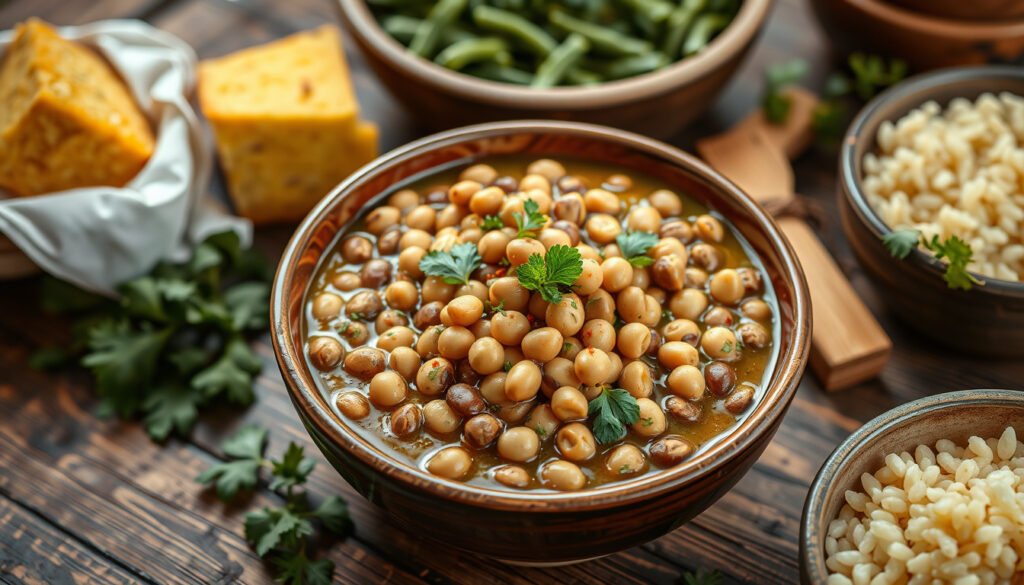
Black Eyed Peas Food: Health, Names, Recipes & Global Traditions
Most people call them black-eyed peas, but botanically they’re cowpeas — a legume that is neither a pea, a bean, nor a lentil. One cup of cooked black-eyed peas delivers 13 grams of protein and 11 grams of fiber, making them a nutritional powerhouse with a rich history across West Africa, the American South, India, and Brazil.
Protein per 100 g cooked: 8.3 g ·
Fiber per 100 g cooked: 5.5 g ·
Calories per 100 g cooked: 94 ·
New Year’s tradition common in: USA, Egypt, Nigeria
Quick snapshot
- Black-eyed peas are a legume of the cowpea species (Healthline)
- Rich in protein (13 g per cup) and fiber (11 g per cup) (Healthline)
- Traditional New Year’s dish in the Southern United States (Harvard Health)
- Exact origin (multiple possible domestication centers in West Africa) (Wikipedia)
- Relative health superiority vs other legumes depends on the metric (Medical News Today)
- Growing interest in plant-based proteins may increase demand (Harvard Health)
- More research needed on health benefits and antinutrient reduction (WebMD)
Six key facts about black-eyed peas, drawn from official and editorial sources.
| Attribute | Value |
|---|---|
| Botanical name | Vigna unguiculata subsp. unguiculata |
| Common names | Cowpea, lobia, chawli, ewa |
| Calories (cooked, 100 g) | 94 kcal (Healthline) |
| Protein (cooked, 100 g) | 8.3 g (Healthline) |
| Fiber (cooked, 100 g) | 5.5 g (Healthline) |
| Top producer | Nigeria (Wikipedia) |
Are black-eyed peas a healthy food?
Nutritional profile
- Calories: 198 per cup cooked (Healthline)
- Protein: 13 g per cup (Healthline)
- Fiber: 11 g per cup (Healthline)
- Fat: 0.9 g per cup (Healthline)
- Folate: 89% of Daily Value per cup (Healthline)
- Iron: 24% of Daily Value per cup (Healthline)
- Magnesium: 22% of Daily Value per cup (Healthline)
Health benefits
Black-eyed peas support heart health through their high fiber and low fat content. A small study highlighted by Harvard Health suggests they may cause less intestinal gas than black beans or pinto beans. The folate content also makes them valuable during pregnancy (Medical News Today).
Potential downsides
Black-eyed peas contain antinutrients like phytates, which can reduce mineral absorption. WebMD notes that proper soaking and cooking significantly lower these compounds. The trade-off: a little preparation turns them into a nutritional powerhouse.
The implication: The combination of high fiber, folate, and low fat makes black-eyed peas a smart choice for anyone targeting heart health, digestive regularity, or pregnancy nutrition—all with less gas than many other legumes.
Are black-eyed peas lentils or beans?
Botanical classification
- Black-eyed peas belong to the species Vigna unguiculata, commonly called cowpea (Wikipedia).
- They are neither true beans (Phaseolus) nor lentils (Lens culinaris).
- Their closest relatives include yardlong beans and other cowpea varieties.
Differences from true beans
True beans (like kidney beans, black beans) are in the genus Phaseolus and originated in the Americas. Black-eyed peas, being Vigna, are of African origin and have a creamier texture and milder flavor (Healthline).
Differences from lentils
Lentils are lens-shaped and cook in about half the time. Black-eyed peas are larger, rounder, and require a longer simmer. Nutritionally, lentils offer slightly more fiber per cup, but black-eyed peas provide more folate (Medical News Today).
Culinary uses
Despite their classification confusion, black-eyed peas behave like beans in the kitchen: they hold their shape when simmered, absorb flavors well, and work in soups, stews, and salads.
The catch: Calling them “peas” is a misnomer—they are legumes, closer to cowpeas than garden peas. But that botanical truth doesn’t change their versatility in the pot.
What is another name for black-eyed peas?
Global names
- Nigeria: ewa (Yoruba) or ewa oloyin
- Egypt and Arabic-speaking countries: lobia
- India: lobia or chawli (Hindi)
- English: cowpea, black-eyed pea, or crowder pea
- Brazil: feijão-fradinho
Why “cowpea”?
The name “cowpea” comes from the plant’s use as fodder for cattle, though today the dried seeds are primarily consumed by humans (Wikipedia).
The implication: Across cultures, the same ingredient wears different names, but the core identity remains—a legume that bridges continents and culinary traditions.
What is the best way to eat black-eyed peas?
Southern-style black-eyed peas
A classic preparation begins with dried peas. According to the Institute of Child Nutrition (USDA recipe):
- 1 lb dry black-eyed peas yields about 2.75 cups dry or 7 cups cooked.
- Soak overnight in 1.75 qt cold water, or use the quick-soak method (boil 2 minutes, rest 1 hour).
- Drain, rinse, then simmer with onion, garlic, and smoked turkey or ham hock until tender (~45-60 minutes).
Hoppin’ John
The iconic Lowcountry dish combines black-eyed peas with rice, onions, and bacon or ham. Often served on New Year’s Day for luck (Harvard Health).
Simple stewed black-eyed peas
For a vegan version, Sweet Potato Soul suggests using liquid smoke, smoked paprika, and bay leaves to replicate the smoky depth without meat.
Canned vs dried preparation
Canned black-eyed peas are already cooked—just rinse and heat. Dried versions require soaking but offer a firmer texture and lower sodium (WebMD).
What this means: The best method depends on your time. Dried peas reward patience with creaminess; canned peas get the job done in minutes. Either way, black-eyed peas pair beautifully with rice, cornbread, or greens.
What’s healthier, chickpeas or black-eyed peas?
Both are nutritious, but they differ slightly in macronutrient density.
| Per 100 g cooked | Black-eyed peas | Chickpeas |
|---|---|---|
| Calories | 94 | 139 |
| Protein | 8.3 g | 8.9 g |
| Fiber | 5.5 g | 7.6 g |
| Fat | 0.5 g | 2.6 g |
| Carbohydrates | 17 g | 23 g |
| Folate (% DV) | ~25% | ~10% |
Data from Healthline and Medical News Today.
The trade-off: Chickpeas edge ahead in fiber and protein; black-eyed peas win on lower calories and higher folate. Both are excellent plant-based protein sources. Your choice may come down to texture and recipe fit.
What country eats the most black-eyed peas?
Top consumers
- Nigeria: The world’s largest producer and consumer of cowpeas (Wikipedia).
- Ghana, Togo, Benin: Also heavy consumers in West Africa.
- United States: Particularly in the South, where they are a New Year’s tradition.
- Brazil: Used in feijoada-style dishes and street food.
- India: Eaten as lobia curry in many regions.
- Caribbean: Often paired with rice and coconut.
Regional dishes
In Nigeria, ewa oloyin is a popular street snack—mashed black-eyed peas served with fried plantains and chili. In the American South, Hoppin’ John reigns, while in India, lobia is cooked in a spiced gravy with onions and tomatoes.
The pattern: The highest consumption per capita tracks West Africa and the American South—two regions with deep historical ties to the legume. For anyone looking to explore global cuisines, black-eyed peas are a perfect starting point.
Timeline: The history of black-eyed peas
- ~3000 BCE: Cowpea domestication in West Africa (Wikipedia)
- 17th century: Black-eyed peas introduced to the Americas via the transatlantic slave trade (Wikipedia)
- 1890s: First written mention in Southern cookbooks
- 1970s: Global spread to South Asia and Caribbean cuisines
From an ancient African staple to a diaspora food that crossed oceans, black-eyed peas carry centuries of agricultural and cultural history—and they’re still evolving as a modern plant-protein source.
What we know and what remains unclear
Confirmed facts
- Black-eyed peas are a legume of the cowpea species (Vigna unguiculata).
- Rich in protein (13 g per cup) and fiber (11 g per cup) (Healthline).
- Eaten in West Africa, USA, India, and Brazil.
- Traditional New Year’s dish in the Southern USA (Harvard Health).
What’s unclear
- Exact geographic origin (multiple domestication centers proposed) (Wikipedia).
- Which legume is “healthiest” depends on the nutritional metric used.
Expert perspectives
“Black-eyed peas are a legume of the cowpea species, distinct from true beans and lentils.”
Wikipedia (botanical classification)
“Their creamy texture and mild, earthy flavor make them a versatile base for both traditional and modern recipes.”
“Simmer them with onion, garlic, and smoked turkey for a deeply savory Southern-style dish.”
Why these voices matter: The botanical precision of Wikipedia, the sensory take from Sporked, and the hands-on know-how from African Bites together paint a complete picture—from classification to dinner plate.
For anyone trying to eat less meat without sacrificing flavor or tradition, black-eyed peas offer a direct path: learn one good recipe and you’ve got a meal that’s traveled centuries. The choice is clear: soak them overnight, simmer them low, and taste a legume that has fed the world.
tools.myfooddata.com, gardeninthekitchen.com, utphysicians.com, youtube.com, tools.myfooddata.com
For those interested in the health benefits and cooking methods, our comprehensive nutritious legume guide explores everything from traditional recipes to global variations.
Frequently asked questions
Do black-eyed peas need to be soaked before cooking?
Yes, soaking reduces cooking time and leaches out antinutrients. The Institute of Child Nutrition recommends overnight soaking or a quick-soak method.
Can you eat black-eyed peas raw?
No. Raw black-eyed peas contain lectins and phytic acid that can cause digestive upset. Always cook them thoroughly (WebMD).
Are black-eyed peas gluten-free?
Yes, they are naturally gluten-free. However, check for cross-contamination if you have celiac disease (Healthline).
How long do you cook dried black-eyed peas?
After soaking, simmer for 30–60 minutes until tender. Pressure cooking takes about 10 minutes. Canned varieties need only reheating (Institute of Child Nutrition).
Are black-eyed peas good for weight loss?
Yes, because they are low in fat and high in fiber and protein, which promote satiety. One cup has 198 calories and 13 g protein (Healthline).
Can dogs eat black-eyed peas?
Plain cooked black-eyed peas are safe for dogs in moderation, but avoid added salt, onions, or garlic. Always consult your veterinarian first (WebMD).
What is Hoppin’ John?
Hoppin’ John is a Southern dish of black-eyed peas cooked with rice, pork (often bacon or ham hock), and seasonings. It’s traditionally eaten on New Year’s Day for good luck (Harvard Health).
Meer gerelateerde berichten
 Stamp Prices in Ireland 2026: How Much Is a Stamp
 Chick-fil-A Salads: Menu, Health Rankings & Nutrition
 Allstate Customer Service Number: Direct Lines & Hours (2025)
 Battlefield 2042 Release Date: Is It Worth Playing in 2025
 Myers-Briggs Personality Types: Rarest, Unhappiest & Elon Musk
 arizona cardinal v 49er match player tat
 Avatar: The Last Airbender 2026 Movie: Release, Cast, News
 Tiana’s Bayou Adventure Opening Date: Key Info & Specs