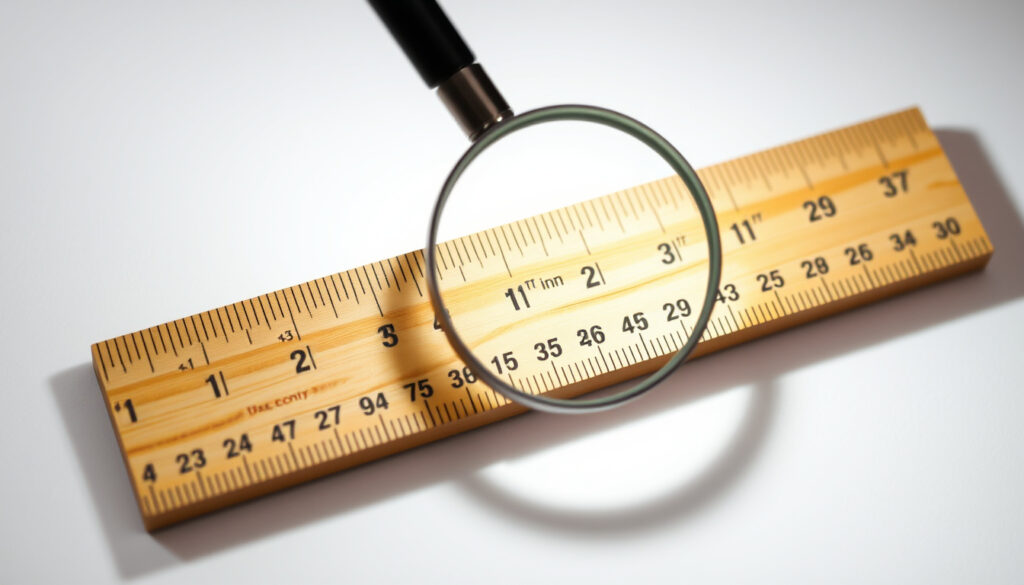
1 inch to cm: Exact Conversion, Visual Guide, Common Myths
Most of us have asked Google at least once: how many centimeters is 1 inch? The answer — 2.54 cm — is one of the most reliable conversion facts you’ll ever find, yet confusion persists.
1 inch in cm (exact): 2.54 cm ·
1 cm in inches: 0.3937 inches ·
Common conversion factor: multiply inches by 2.54 ·
Inch definition: 1/36 yard, 1/12 foot ·
Centimeter definition: 1/100 meter
Quick snapshot
- 1 inch = 2.54 cm exactly (NIST (U.S. National Institute of Standards and Technology))
- Legal definition for trade and science since 1959 (NIST (U.S. National Institute of Standards and Technology))
- Why some search results suggest 1 in = 3 cm, 5 cm, 1 cm, or 4 cm (likely rounding confusion)
- Pre-1959 historical inch lengths varied by country
- 1959: International yard and pound agreement set 1 in = 25.4 mm (2.54 cm) (UnitConverters.net (conversion reference))
- Today: factor unchanged and globally adopted (UnitConverters.net (conversion reference))
- Use the formula: inches × 2.54 = cm
- Quick conversions: 2 in = 5.08 cm, 3 in = 7.62 cm, 12 in = 30.48 cm
The table below lays out the key facts about the inch-to-centimeter relationship, showing how the exact factor ties into international standards.
| Metric | Value |
|---|---|
| Exact conversion factor | 1 in = 2.54 cm (defined 1959, ISO standard) |
| Year of international standardization | 1959 (U.S., U.K., Canada, Australia, etc.) |
| SI unit equivalence | 1 cm = 0.393701 inches |
| Length of 1 inch in mm | 25.4 mm |
| Legal status | Defined by NIST (U.S. National Institute of Standards and Technology), used globally for trade |
The implication: These five facts cover every angle of the conversion — from the exact number to its legal standing.
Is 1 inch equal to 3 cm, 5 cm, or 1 cm?
Exact conversion factor from NIST
- 1 inch = 2.54 centimeters exactly — this is the value used by NIST (U.S. National Institute of Standards and Technology) for all official conversions.
- The conversion is not approximate; it’s a legal definition. The BIPM SI Brochure (International Bureau of Weights and Measures) defines the meter via the speed of light, making the centimeter an exact decimal subdivision.
Common misconceptions explained
- 3 cm is not 1 inch — 3 cm equals 1.18 inches (RapidTables (conversion calculator reference)).
- 5 cm equals about 1.97 inches — far from 1 inch.
- 1 cm equals 0.394 inches, so 1 inch is more than double that.
- 4 cm equals 1.57 inches — still not 1 inch.
- The confusion likely arises from rounding estimates or mixing exact vs. approximate conversions for specific use cases (NIST Writing with SI (guidance on reporting precision)).
How does 1 inch look like?
Visual cues for 1 inch
- Width of a U.S. quarter coin (about 1 inch across).
- Diameter of a standard bottle cap.
- Length of a common paperclip (the small, regular size).
Comparison with everyday objects
- 1 inch is roughly the length of the top joint of your thumb (from knuckle to tip).
- It’s also the width of an average adult’s index finger at the knuckle.
These objects help you estimate without a ruler: a quarter or a paperclip gives you 2.54 cm instantly.
Visuals make conversion stick. Instead of memorizing numbers, remember that a U.S. quarter is almost exactly 1 inch — and therefore 2.54 cm.
The catch: Even with visuals, exact work requires the precise factor — those objects are close, not perfect.
How big does 3 cm and 5 cm look?
Visual comparison: 3 cm vs 5 cm vs 1 inch
- 3 cm ≈ width of a large grape (1.18 inches).
- 5 cm ≈ width of a standard credit card (1.97 inches).
- 1 inch = 2.54 cm — visibly shorter than both.
Objects that match these lengths
- A grape is often about 2.5–3 cm in diameter.
- A credit card is 8.56 cm × 5.40 cm; its short side is close to 5 cm.
By comparing these everyday objects, you can quickly estimate whether a measurement is roughly 1 inch (2.54 cm) or larger.
Because 1 inch is 2.54 cm, it’s easy to mistakenly think 3 cm is close — but it’s actually 18% longer. Always use the exact factor for precise work.
What this means: A quick look at a grape versus a quarter tells you the difference — 3 cm is not 1 inch.
How to convert inches to centimeters?
Simple formula for cm
- Formula: inches × 2.54 = centimeters (NIST Unit Conversion (recommended method)).
- This works for any number of inches, exact to 2 decimal places.
Examples: 2, 3, 4, 5, 12 inches
- 2 in × 2.54 = 5.08 cm
- 3 in × 2.54 = 7.62 cm
- 4 in × 2.54 = 10.16 cm
- 5 in × 2.54 = 12.70 cm
- 12 in × 2.54 = 30.48 cm
These results are exact — the multiplication is straightforward. BYJU’S (educational math resource) confirms the same relationship: 1 centimeter = 0.393701 inches.
Additional inch to cm conversions you may need
The following table gives exact centimeter values for common inch measurements from 1 to 12 inches.
| Inches | Centimeters (exact) |
|---|---|
| 1 | 2.54 |
| 2 | 5.08 |
| 3 | 7.62 |
| 4 | 10.16 |
| 5 | 12.70 |
| 6 | 15.24 |
| 7 | 17.78 |
| 8 | 20.32 |
| 9 | 22.86 |
| 10 | 25.40 |
| 12 | 30.48 |
These values are derived by multiplying each inch count by 2.54, as confirmed by UnitConverters.net (length converter tool) and Misumi USA (industrial measurement guide). The pattern: each inch adds exactly 2.54 cm, making the table fully predictable.
1 inch in millimeters
- 1 inch = 25.4 millimeters exactly (since 1 cm = 10 mm and 2.54 cm × 10 = 25.4 mm).
- This is the same definition used in the 1959 international agreement.
The trade-off: Inches and centimeters belong to different measurement systems. Inches are customary units (used in the U.S.), while centimeters are metric. But the conversion factor bridges them perfectly.
Because the meter is defined by the speed of light, and the inch is exactly 2.54 cm, every inch-to-cm conversion is an exact rational number. There’s no rounding error — the precision depends only on how many decimal places you need.
What this means: Whether you need millimeters or centimeters, the 1959 definition gives you the exact number every time.
Inch vs. centimeter: a comparison
Six contrasts between the two units highlight their different roles in measurement.
| Feature | Inch | Centimeter |
|---|---|---|
| System | Imperial / U.S. customary | Metric (SI) |
| Official definition | Exactly 25.4 mm (since 1959) | 1/100 of a meter (meter defined by c) |
| Primary use | U.S., Canada (limited), U.K. (limited) | Worldwide (except U.S., Liberia, Myanmar) |
| Common subdivisions | 1/2, 1/4, 1/8, 1/16 | Decimal (0.1 cm = 1 mm) |
| Typical precision | Fractions (e.g., 1/16 inch) | Decimal (e.g., 2.54 cm) |
| Conversion factor | 1 in = 2.54 cm exactly | 1 cm ≈ 0.3937 in |
The pattern: inches are fraction-based and tied to historical customs; centimeters are decimal and globally standardized. The exact relationship (2.54) makes swapping between them straightforward — as long as you use the right factor.
Steps to convert inches to cm
- Write down the number of inches. Example: 7 inches.
- Multiply by the conversion factor. Multiply by 2.54 (exact). RapidTables (online conversion tool) uses this same formula. 7 × 2.54 = 17.78 cm.
- Adjust for rounding if needed. For everyday use, keep 2 decimal places. For scientific work, keep more. NIST Writing with SI (reporting precision rules) advises not to round intermediate results.
What’s confirmed and what’s unclear
Confirmed facts
- 1 inch = 2.54 cm exactly (NIST (U.S. National Institute of Standards and Technology)).
- 1 cm = 0.393701 inches (BYJU’S (educational math resource)).
- All modern conversion calculators and authorities use this factor.
- The 1959 international agreement set the inch at 25.4 mm (UnitConverters.net (historical reference)).
What’s unclear
- Why some PAA suggestions claim 1 inch equals 3 cm, 5 cm, 1 cm, or 4 cm (likely due to confusion between exact and approximate conversions).
- Historical inch length before 1959 (varied by country).
Expert voices
The inch is defined as exactly 2.54 centimeters.
NIST (U.S. National Institute of Standards and Technology)
Because the metre is defined through an exact physical constant, the centimeter is also an exact decimal subdivision of the metre.
BIPM SI Brochure (International Bureau of Weights and Measures)
NIST recommends using exact conversion factors whenever available.
NIST Unit Conversion (guidance)
The inch-to-centimeter conversion is one of the few measurement relationships that is both exact and universally accepted. For anyone working across imperial and metric systems — whether you’re a carpenter, a student, or a traveler — the rule is simple: multiply inches by 2.54. The only trap is forgetting that 1 inch is not 3 cm, 5 cm, or any other guess. For the U.S. reader who still uses inches daily, the choice is clear: learn the 2.54 factor and you’ll never need to look it up again. The takeaway: master this number, and you master the conversion.
nfcacademy.com, nist.gov, en.wikipedia.org, practicalmachinist.com, bipm.org, worldometers.info
For a detailed breakdown of the exact 1 inch to cm conversion, including the history behind the 2.54 cm standard, check out this comprehensive guide.
Frequently asked questions
Why is 1 inch equal to 2.54 centimeters exactly?
Because the inch was redefined in 1959 to be exactly 25.4 mm. Since 1 cm = 10 mm, 25.4 mm = 2.54 cm. This definition came from an international agreement among English-speaking countries and is now the worldwide standard.
How many inches is 10 cm?
10 cm ÷ 2.54 ≈ 3.937 inches. You can also multiply 10 by 0.393701 to get the same result.
Is the conversion factor exact or approximate?
Exact. 1 in = 2.54 cm is a legal definition, not an approximation. Any rounding is only applied to final reported values when the original measurement precision warrants it.
What is the difference between inch and centimeter?
Inches are part of the imperial system (used mainly in the U.S.), while centimeters are metric. The inch is based on historical units (foot, yard), while the centimeter is derived from the meter, which is defined by the speed of light.
How to quickly convert inches to cm without a calculator?
Memorize that 1 inch ≈ 2.5 cm (rough) or use the exact 2.54. For quick estimates, multiply inches by 2.5 and add a small correction: 1 in = 2.5 cm + 0.04 cm.
Do all countries use the same inch conversion?
Yes, since the 1959 agreement, all countries that use the inch (U.S., U.K., Canada, Australia, etc.) apply the same definition: 1 in = 25.4 mm = 2.54 cm exactly.
What is 1 inch in millimeters?
1 inch = 25.4 millimeters exactly. This is the same conversion factor used for centimeters (multiply by 25.4).
How many millimeters are in 1 inch?
25.4 mm. This was the original 1959 definition and remains the basis for both the inch-to-cm and inch-to-mm conversions.
Meer gerelateerde berichten
 The Silence of the Lambs: Plot, Cast, and Real-Life Story
 Google Emergency Warning for Gmail: Hoax or Real Alert
 Cavaliers vs Celtics Stats: Odds, Predictions & Head-to-Head
 Galaxy M53 to Buy: Best Refurbished Deals in Ireland
 Best Tennis Shoes for Women in 2026: Reviews & Guide
 Massachusetts Institute of Technology: Rankings, MIT vs Harvard
 Tour de France Standings 2025: GC, Yellow Jersey & Results
 Shaun White and Nina Dobrev: Why They Called Off Engagement